Introduction
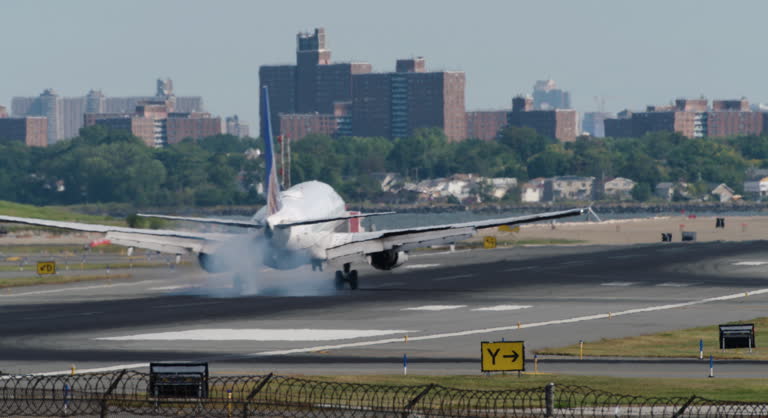
On February 14, 2025, an Air Canada Bombardier CRJ-900 operating as Air Canada Express flight 8646 collided with a Delta Air Lines Boeing 717 during ground operations at LaGuardia Airport (KLGA) in New York. The collision occurred on an active runway in low-visibility winter conditions.
The accident resulted in injuries to several passengers and crew members and caused significant damage to both aircraft. The National Transportation Safety Board (NTSB) opened a full investigation and has been examining surface operations, air traffic control procedures, aircraft crew decision-making, and winter weather conditions.
This analysis provides an operational review of available preliminary information. The investigation remains ongoing and a final probable cause has not been issued. For context on the broader investigative process, see how aviation accident investigations work.
LaGuardia Airport: A Complex Surface Environment
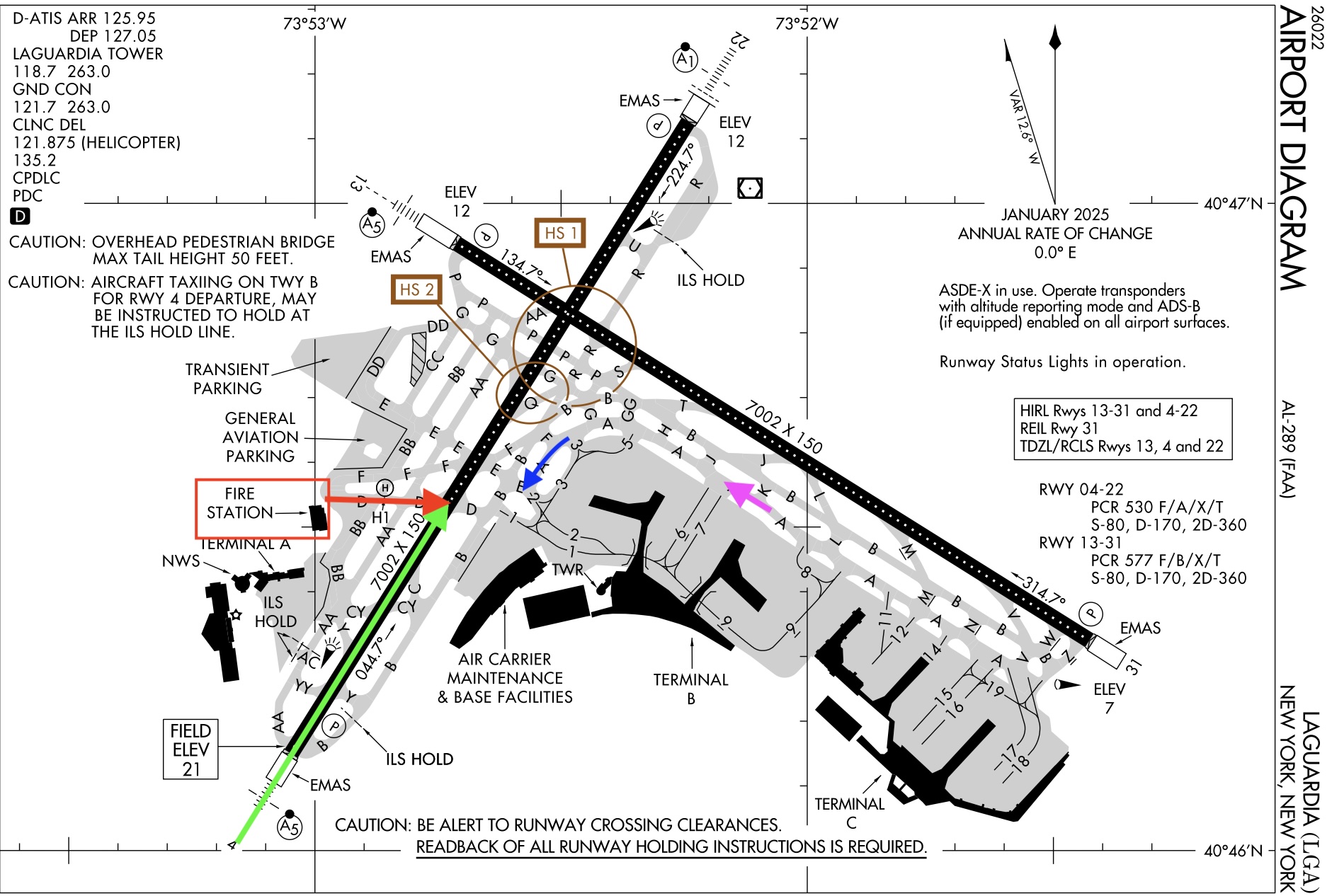
LaGuardia Airport is a challenging operational environment. Its compact footprint, intersecting taxiways, and high-volume traffic operations create elevated runway incursion risk compared to many other major airports. The airport consistently handles a high number of daily operations, many of which require precise coordination between aircraft, vehicle operators, and air traffic control.
The airport's geography creates limited separation between active runways and taxiways. In winter conditions with reduced visibility and contaminated surfaces, the risk of ground conflict increases significantly. Pilots must maintain strong situational awareness, monitor multiple radio frequencies, and execute precise taxiing in close proximity to other aircraft, often in conditions that limit the ability to see potential conflicts early.
Accident Sequence and Known Facts
According to the NTSB preliminary report, the Air Canada Express CRJ-900 was cleared to land on runway 13 at LaGuardia. The Delta Boeing 717, which had been holding near the runway environment, entered the active runway area during the Air Canada aircraft's landing rollout.
The collision occurred at low speed as the Air Canada aircraft was decelerating on the runway. The aircraft made contact primarily in the wing and fuselage areas, resulting in structural damage to both aircraft. There were no fatalities, but several occupants sustained injuries.
Investigators are examining the ATC clearance sequence, radio communications, crew situational awareness, and airport surface markings. The full event timeline, including all clearances and crew acknowledgments, has not yet been publicly released at the time of publication.
Winter Conditions and Surface Operations Risk
Weather conditions at LaGuardia at the time of the accident included falling snow and reduced visibility. Winter weather operations at busy airports create specific surface operations challenges:
- Taxiway and runway edge markings may be obscured by snow accumulation
- Braking action may be reduced on taxiways and runway surfaces
- Reduced visibility limits visual traffic separation
- Radio communications must compensate for reduced visual information
- Increased ATC workload as aircraft move more slowly through the surface environment
These factors are directly relevant to understanding why runway incursion events are disproportionately more likely in winter and low-visibility conditions. The demands of simultaneous operational management in complex weather is also discussed in our analysis of weather decision-making in aviation.
Runway Incursion Analysis
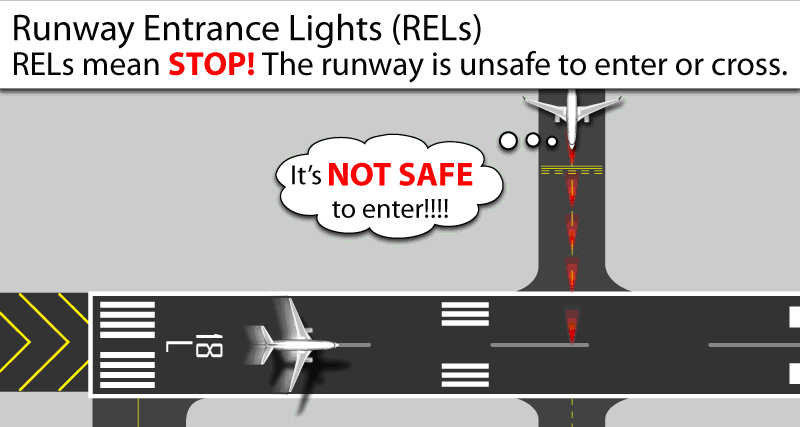
Runway incursions are among the highest-priority safety concerns in commercial aviation. The FAA defines a runway incursion as any occurrence on an airport surface involving the incorrect presence of an aircraft, vehicle, or person on the protected area of a surface designated for aircraft landing and takeoff.
Incursions are typically categorized by severity from Category A, where separation decreases and accident avoidance is difficult, to Category D, where there is little or no safety effect. The LaGuardia collision is clearly at the severe end of the spectrum as the two aircraft made physical contact.
Contributing factors in runway incursion events commonly include:
- Miscommunication between ATC and flight crew
- Crew failure to maintain runway position awareness
- ATC clearance conflicts or errors in sequencing
- Reduced crew situational awareness on complex taxiway layouts
- Ambiguous or incomplete readback verification
Investigation of air traffic control recordings and crew communications will be critical to determining how the clearance sequence evolved and where the breakdown occurred. These communication and procedural dimensions are also examined in human factors in aviation accidents.
Operational Considerations in Crew Resource Management
Crew resource management plays an important role in preventing surface conflicts. Effective CRM on the ground includes structured taxi briefings, active monitoring of ATC instructions, explicit confirmation of runway crossings, and clear communication between pilot flying and pilot monitoring about position and clearance status.
In complex environments like LaGuardia, the non-flying pilot's role in maintaining ground situational awareness is significant. When visual cues are reduced by weather, the crew must rely more heavily on radio position monitoring, airport diagram reference, and explicit verification procedures. Training quality and line standards for surface operations will likely be examined as part of the investigation.
Conclusion
The Air Canada 8646 collision at LaGuardia Airport illustrates how runway incursion risk is elevated in complex, high-traffic airport environments — particularly in winter conditions with reduced visibility. The event involves multiple potential contributing factors, including surface operations complexity, ATC communication procedures, crew situational awareness, and environmental conditions.
A full evaluation of causation will depend on the findings of the NTSB investigation. When complete, the factual record will help determine whether the event represents isolated crew or ATC error, or reflects systemic operational vulnerabilities. The broader framework for how these findings are developed is covered in how aviation accident investigations work.
Need Aviation Expert Analysis?
If you are evaluating an aviation matter involving runway incursions, surface operations, ATC coordination, or accident causation, AeroVerdict provides expert aviation analysis for attorneys and legal teams.
Request an Expert Case Review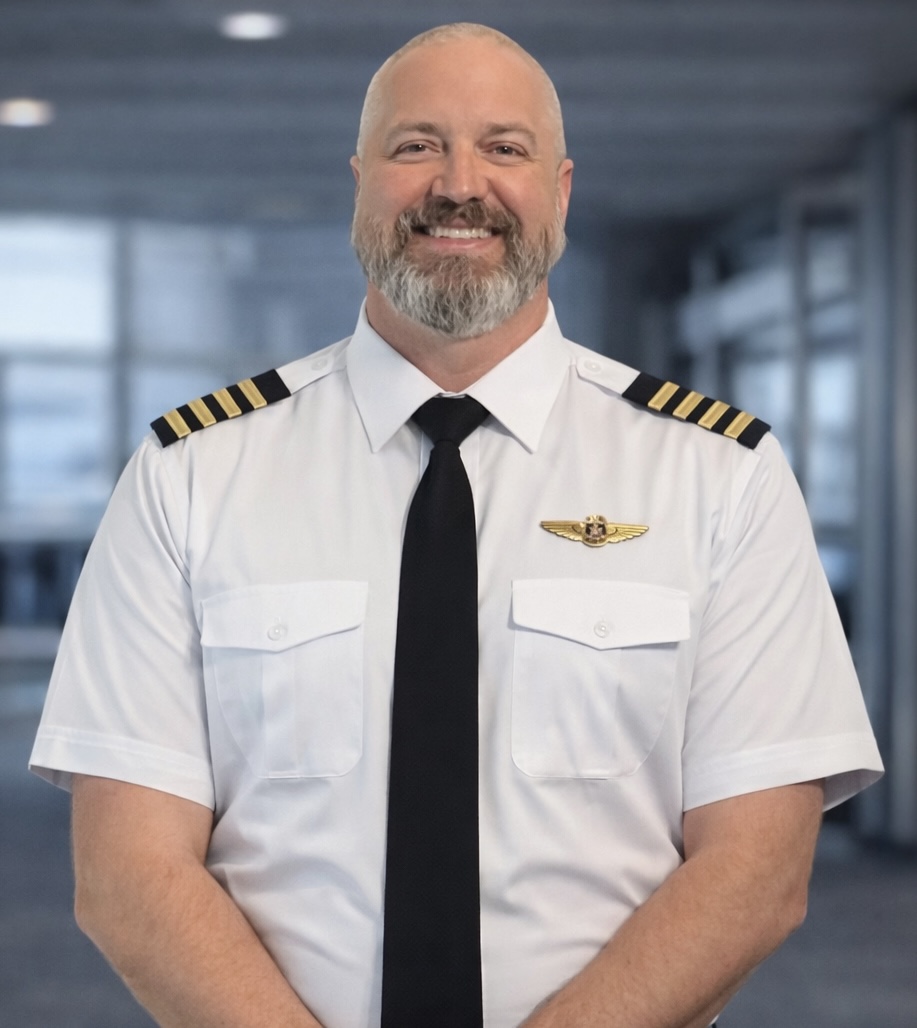
About the Author
Kevin Alvarez
Kevin Alvarez is an ATP-rated Chief Pilot and aviation expert witness with experience in corporate aviation operations, pilot decision-making, FAA compliance, and aviation accident analysis. Through AeroVerdict, he provides expert witness and consulting services for attorneys and legal teams.
Full Bio