
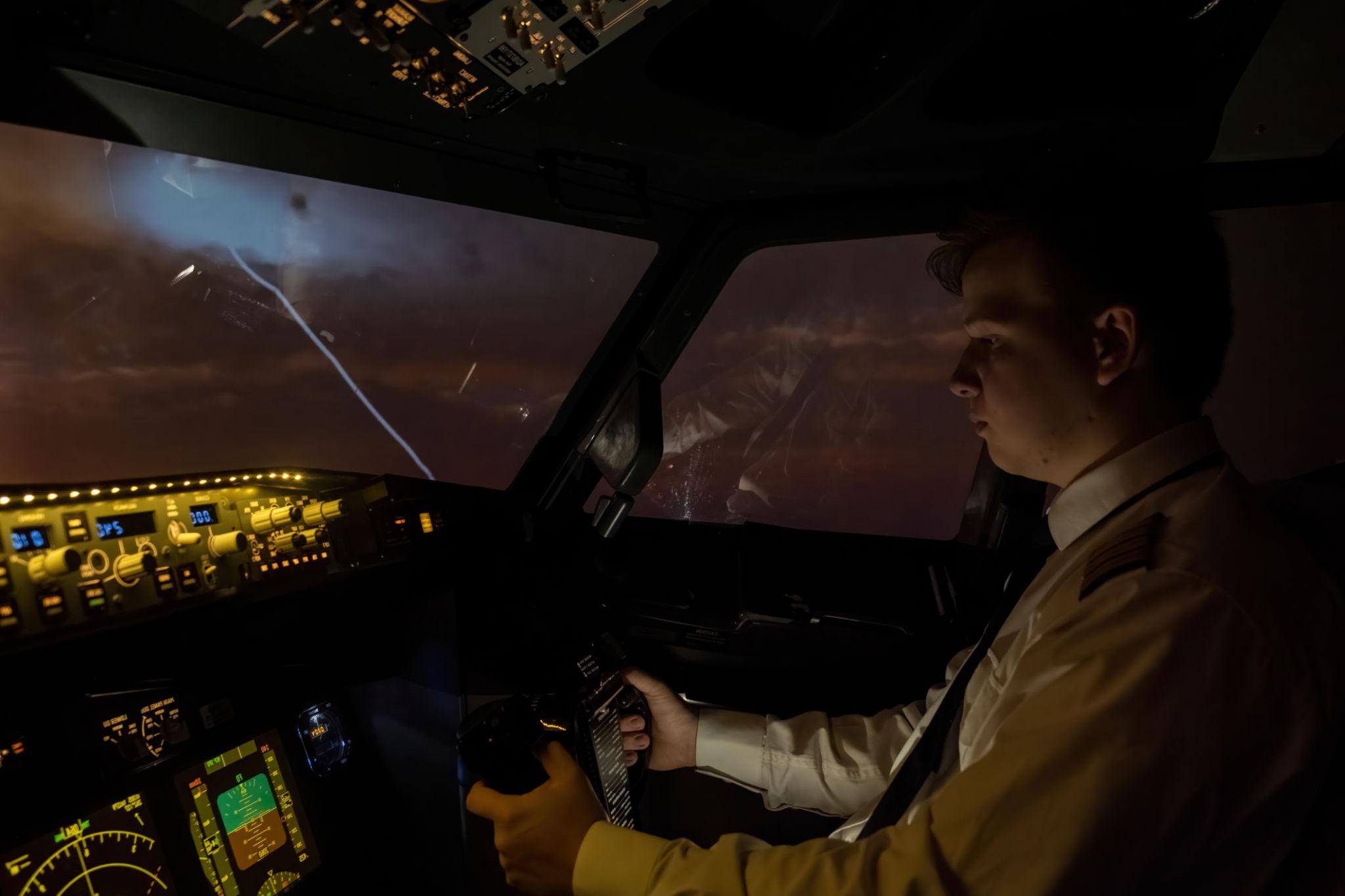
In aviation fatigue cases, the central investigative question is rarely whether a pilot was simply tired. From an operational standpoint, the more important issue is when fatigue began degrading judgment, workload management, vigilance, and decision-making in a way that materially reduced available safety margin.
For aviation attorneys, investigators, and expert witnesses, this distinction matters because fatigue is seldom a single triggering event. More often, it is an accumulated operational condition that gradually narrows options, slows recognition, weakens prioritization, and reduces a crew's ability to recover from developing threats. Understanding how that margin deteriorated is often critical to causation analysis and litigation strategy.
Many fatigue-related events also intersect with broader issues involving pilot decision-making in aviation accidents, human factors analysis, and systems-based accident causation. In practice, the event sequence frequently begins well before the final operational deviation.
Operational Analysis of Fatigue Accumulation
From an operational standpoint, fatigue analysis typically begins well before the accident leg or incident sequence itself. Investigators often evaluate duty patterns, sleep opportunity, circadian timing, workload, schedule disruptions, reserve uncertainty, and operational pressure leading into the event.
In real-world flight operations, fatigue develops gradually. A pilot may still sound normal on the radio, complete checklists, and fly a technically acceptable profile while cognitive reserve is already shrinking beneath the surface.
Early report times, shortened overnight rest periods, multiple flight segments, time-zone transitions, extended duty days, and cumulative sleep restriction can all produce a crew that remains legally dispatchable while becoming operationally degraded. That distinction is critical in litigation. Compliance with FAA flight and duty regulations does not automatically establish that performance margin remained intact.
This is also where broader operational culture becomes relevant. In many corporate and commercial environments, crews gradually adapt to compressed schedules and reduced recovery periods until diminished performance begins to normalize operationally. Similar patterns frequently appear in analyses involving corporate aviation risk management.
Circadian Disruption and Cognitive Performance

Circadian disruption adds another layer to fatigue-related performance degradation. A pilot operating during the window of circadian low may experience slower information processing, reduced vigilance, weaker working memory, and degraded prioritization even when total sleep appears marginally adequate on paper.
In practice, this often affects subtle but operationally important tasks first. Crews may become slower to recognize deviations, less resistant to automation complacency, less effective at monitoring energy state trends, or delayed in recognizing when an approach should be discontinued.
These effects are rarely dramatic in isolation. Instead, fatigue gradually erodes the crew's ability to identify and interrupt a deteriorating operational sequence before margin becomes critically narrow. This is one reason fatigue-related events often overlap with issues involving unstable approaches, continuation bias, and weather-related aviation decision-making.
Operational Pressure and Margin Erosion
Operational pressure is frequently the factor that converts fatigue from a background condition into a direct causation issue. Importantly, pressure does not need to be explicit to influence pilot performance.
Schedule recovery concerns, passenger expectations, destination constraints, deteriorating weather, limited parking availability, crew repositioning requirements, or a perceived need to avoid diversion can all narrow decision-making flexibility.
Fatigue weakens a pilot's ability to re-rank priorities effectively under that pressure. The result is not always reckless behavior. More commonly, crews begin accepting narrower operational margins, delaying conservative decisions, or normalizing conditions that would otherwise trigger intervention.
Investigators frequently see this pattern in runway overruns, unstable approaches, runway excursions, and weather-related accident sequences where crews continue functioning — but with progressively less reserve available to absorb additional workload or changing conditions. This is where safety margin often begins to erode long before the final event sequence becomes visible externally.
Pilot Decision-Making Under Fatigue
Fatigue-related performance degradation often becomes most visible during decision-chain evaluation. The investigation focus is not only what happened, but how the crew's ability to detect, prioritize, and recover gradually deteriorated over time.
- Preflight and Dispatch Acceptance: The first decision point frequently occurs before departure. Investigators may examine whether the pilot was operationally rested in any meaningful sense, or merely legal to launch under minimum regulatory requirements. Prior duty sequences, commuting factors, reserve callouts, disrupted hotel rest, circadian mismatch, and cumulative sleep restriction may all become operationally significant even when flight and duty rules were technically satisfied.
- En Route Workload Management: Fatigued crews often begin falling behind the aircraft in subtle ways. They may defer tasks too long, absorb changing conditions more slowly, fail to update mental models effectively, or delay revising the operational plan as workload increases near the terminal environment. From outside the cockpit, the operation may still appear routine. Internally, however, cognitive reserve may already be narrowing.
- Approach and Landing Continuation: Fatigue frequently appears during approach and landing phases as delayed recognition of unstable parameters, weaker cross-monitoring, reduced challenge-and-response discipline, and a higher threshold for initiating a go-around. An approach may remain technically recoverable until very late in the sequence, but a fatigued crew can gradually use up the available recovery window. This issue often becomes highly relevant in runway excursion investigations and unstable approach litigation.
- Post-Deviation Response: Once the operation begins drifting off plan, fatigued crews may fixate, simplify, or continue with a deteriorating strategy longer than expected. This can affect runway alignment corrections, rejected landing timing, abnormal checklist execution, braking decisions, and communications with ATC. In many fatigue cases, the chain is cumulative rather than singular.
Human Factors and Accident Causation Analysis

Fatigue should be evaluated as a performance-margin issue tied directly to operational causation, not merely as a generalized human-factors label. Several investigative questions typically govern the analysis:
- What was the crew's realistic sleep opportunity versus documented rest?
- What operational pressures were influencing pilot decision-making?
- What objective indicators of degraded performance appear in the operational record?
- What safeguards existed, and why did they fail to interrupt the sequence?
Objective signs of degraded performance may include checklist omissions, delayed callouts, unstable approach continuation, missed altitude or speed trends, weak crew coordination, incorrect switch selections, delayed go-arounds, or nonstandard troubleshooting. Individually, these deviations may appear minor. In sequence, they often reveal a shrinking cognitive reserve and deteriorating operational margin.
Fatigue also rarely acts alone. It commonly interacts with weather, automation dependency, ATC changes, runway conditions, crew pairing dynamics, and organizational pressure. The proper investigative question is not whether fatigue was the sole cause, but whether it materially reduced the crew's ability to detect, prioritize, and recover in a time-critical environment. Additional investigative frameworks can be found in how aviation accident investigations work.
FAA and Regulatory Considerations
FAA flight and duty regulations establish minimum legal standards, but operational fatigue analysis frequently extends beyond simple regulatory compliance. Flight time limitations, rest requirements, and duty period restrictions create a floor below which operators cannot legally go. But they do not define a ceiling of adequate rest, nor do they guarantee that a legally rested pilot is operationally unimpaired.
In litigation, attorneys and investigators may examine whether realistic sleep opportunity existed, whether scheduling practices encouraged cumulative fatigue exposure, and whether fatigue risk management controls were operationally effective. Relevant guidance and research regarding fatigue risk and human performance can also be found through the Federal Aviation Administration and the National Transportation Safety Board.
The presence of an experienced captain does not eliminate fatigue effects, nor does the absence of a medical disqualification establish unimpaired performance. A pilot may remain technically functional while judgment, monitoring, prioritization, and threat recognition degrade significantly under workload.
Legal Considerations for Aviation Attorneys
For aviation attorneys, fatigue cases often require reconstruction of how operational margin was consumed across the entire duty sequence rather than focusing exclusively on the final operational error. Key litigation questions may include:
- Were scheduling practices operationally realistic?
- Did company culture discourage conservative decision-making?
- Were fatigue risk controls properly designed and enforced?
- Did operational pressure contribute to continuation bias?
- Did fatigue materially impair the crew's ability to recover from developing threats?
In many cases, the legal significance lies not in dramatic incapacitation, but in the gradual degradation of monitoring, prioritization, and decision quality as operational complexity increases. This systems-based approach is often essential when evaluating aviation negligence, operational causation, and liability exposure.
Conclusion
Fatigue cases require more than generalized references to pilot tiredness. They require detailed reconstruction of how operational margin deteriorated across the duty sequence, how circadian and workload pressures influenced decision-making, and where a still-manageable situation became progressively less recoverable.
In many aviation accidents and incidents, the operational reality is not sudden incapacitation. It is a crew continuing to function with steadily reduced reserve while threats, workload, and pressure continue building in the background. Understanding how that margin eroded across the operational sequence is frequently critical to determining liability exposure and operational accountability.
Need Aviation Expert Analysis?
If you are evaluating an aviation matter involving pilot fatigue, human factors, decision-making degradation, or accident causation, AeroVerdict provides expert aviation analysis for attorneys and legal teams.
Request an Expert Case Review
About the Author
Kevin Alvarez
Kevin Alvarez is an ATP-rated Chief Pilot and aviation expert witness with experience in corporate aviation operations, pilot decision-making, FAA compliance, and aviation accident analysis. Through AeroVerdict, he provides expert witness and consulting services for attorneys and legal teams.
Full Bio