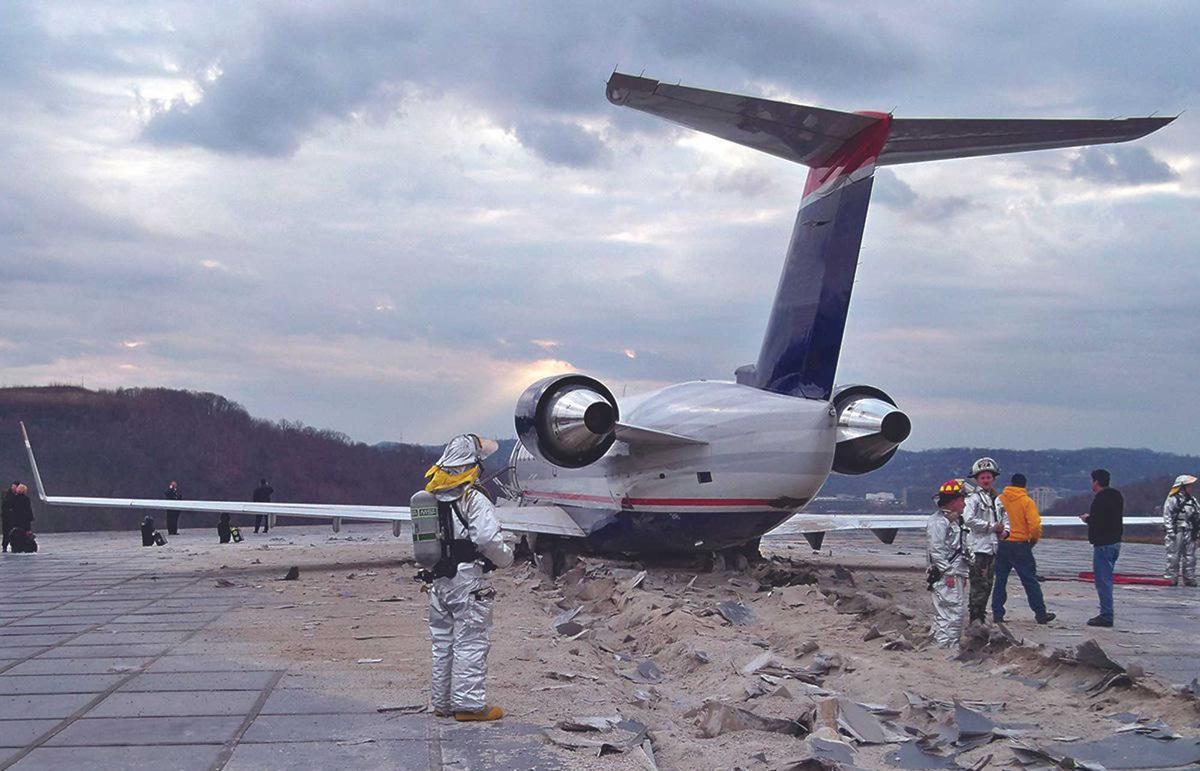
When an aircraft runs out of runway, the central question is rarely just how far it floated after crossing the threshold. The more important question for attorneys is this: when did the landing margin actually begin to erode?
From an operational standpoint, that is where analysis typically begins. A landing overrun or runway excursion is often treated as a touchdown problem, but in real operations the available margin is usually consumed in stages. The chain can begin with an optimistic landing distance calculation, continue through a contaminated runway assessment based on incomplete or stale information, tighten further with tailwind or speed deviations, and close with a touchdown that is long, fast, or both. Understanding the full sequence, not just the final event, is what makes the difference in litigation.
What Happens in a Landing Overrun
A runway excursion occurs when an aircraft departs the paved surface: off the end, off the side, or both. An overrun is the most common form: the aircraft crosses the departure end of the runway with speed remaining. It doesn't always mean the airplane was out of control. In many cases, the aircraft was under positive control right up to the point it ran out of pavement.
That distinction matters legally. An aircraft under control at the threshold, still on centerline, still tracking normally, and still running off the end, tells a different story than a blown tire or a hydraulic failure. It suggests the energy state entering the flare, the touchdown point, and the stopping distance available were not properly reconciled before the approach was continued.
The variables that determine outcome are well established: approach speed, threshold crossing height, touchdown point, surface condition and braking effectiveness, use of thrust reversers and spoilers, and the actual runway length available. When any one of these is unfavorable, the others must compensate. When several are unfavorable simultaneously, the math closes quickly.
Operational Analysis: Where the Margin Actually Goes
Landing distance planning begins before departure, and the numbers used in planning carry real consequences. Certified landing distance data, the figures in the AFM, are produced under specific, controlled conditions: dry runway, maximum braking, no float, precise speed at the threshold, experienced test pilots. In line operations, those conditions are rarely replicated exactly.
Operators and regulations account for this with safety factors. FAR Part 121 air carriers, for example, are required to apply a 60% factoring requirement, meaning the demonstrated landing distance must be no more than 60% of the available runway. That factor exists because the gap between a test-condition stop and a real-world stop is real and documented. When operators work from un-factored or minimally factored numbers, or when crews re-calculate on the fly using conditions that differ from their planning assumptions, the buffer disappears before the approach begins.
Contaminated runways compress this further. Braking action reports have time stamps for a reason. Surface conditions change. A "good" braking action report from 45 minutes earlier may not reflect conditions at touchdown. Wet pavement at certain temperatures, compacted snow, or thin ice layers may look acceptable in a PIREP but produce braking coefficients dramatically lower than dry pavement values. Crews and dispatchers who treat stale braking action reports as current data are making a planning assumption that the evidence frequently does not support.
Pilot Decision-Making and the Committed Approach
One of the most operationally significant points in any overrun sequence is the moment the crew stops actively re-evaluating and becomes committed to landing. This is not always a conscious decision. In many accidents, there is no identifiable moment where a pilot decided "we are landing regardless." Instead, the decision accumulates: speed is a little high, but not dramatically; the approach is slightly unstable, but stabilizing; the wind shifted, but not enough to call for a go-around. Each concession feels individually defensible. Collectively, they close the available margin.
Pilot decision-making in this phase is directly relevant to legal causation analysis. The question is not simply whether a go-around was available. It almost always is until very late in the approach. The question is whether the decision to continue was operationally justified given the cumulative state of the approach. Training standards, airline procedures, and manufacturer guidelines all establish the criteria for a stabilized approach and the expectation that a go-around will be executed when those criteria are not met. When a crew continues past those criteria, the decision carries weight.
Human Factors: Continuation Bias and Pressure to Land
The human factors literature on approach and landing accidents is extensive and consistent. Continuation bias , the tendency to continue a course of action already in progress rather than deviate from it, is among the most well-documented contributors to unstable approach continuation. The further along an approach a crew gets, the stronger the pull to complete it.
This effect is amplified by external pressures. Schedule pressure, passenger expectations, fuel state, alternate airport weather, crew fatigue, and even the presence of a senior pilot in the other seat can all shift the threshold at which a go-around feels warranted. None of these factors are excuses. But they are operationally real, and they appear consistently in accident records.
Human factors analysis in litigation examines whether these pressures were present, whether the operator's culture and procedures adequately counteracted them, and whether the training environment prepared crews to execute go-arounds under realistic conditions — not just in a sterile simulator exercise. When training focuses on the mechanics of a go-around without addressing the psychological barriers to initiating one, the procedural standard exists on paper but not in practice.
Aircraft Performance: What the Numbers Actually Show
Performance analysis in runway overrun cases reconstructs what the aircraft was actually doing at each phase — not what the crew believed, not what the numbers predicted, but what the flight data shows. When a flight data recorder is available, this reconstruction can be precise.
Threshold crossing height and speed are foundational. An aircraft that crosses the threshold five knots fast and ten feet high will touch down noticeably further down the runway and carry more speed at touchdown. Both effects increase stopping distance. Neither is catastrophic on a long, dry runway. Both can be decisive when the runway is short, contaminated, or wet.
The flare and float also matter. A smooth, extended flare bleeds speed, but it does so at the cost of runway length. In a normal landing, the float is brief and planned. In a fast or high approach, the flare may be extended instinctively: the crew feels the aircraft is not ready to land, so the flare continues while the runway disappears beneath them.
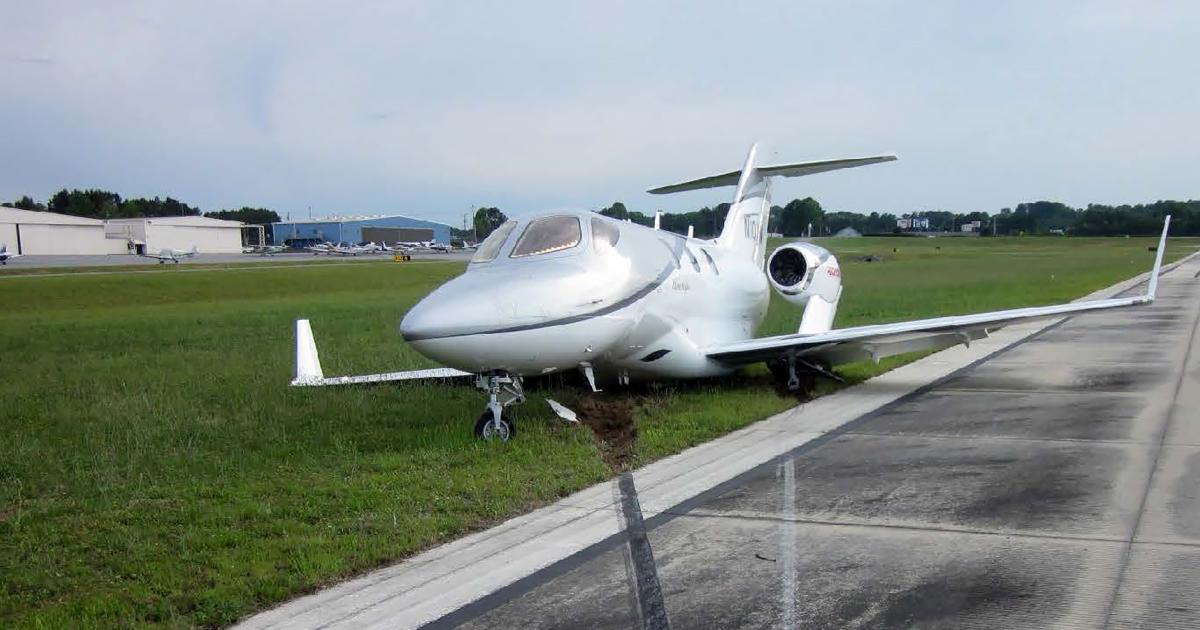
Post-touchdown performance matters equally. Spoiler deployment, autobrake selection and actual brake pressure, thrust reverser use — each contributes to the total stopping picture. When flight data shows delayed spoiler deployment, partial braking, or late reverser application, those delays can be quantified in feet. In tight-margin situations, those feet are the difference between stopping on the runway and stopping off it.
Accident Causation: The Layered Chain
Runway overruns are rarely single-cause accidents. The accident investigation framework that produces a useful causal analysis (useful to investigators, useful to attorneys) is one that traces each contributing factor back to its origin and assigns it appropriate weight.
A typical overrun causation chain might include: inadequate preflight distance planning, contaminated runway data that was accepted without adjustment, an unstabilized approach that was continued past the stabilization gate, a long and fast touchdown, and delayed post-touchdown braking. Each link in that chain has a responsible party. Some are crew decisions. Some are operator policies. Some are regulatory compliance questions. Mapping the chain clearly is the foundation of a credible expert opinion.
For attorneys, the value of this analysis is not simply establishing that something went wrong. It is establishing where accountability lies — and whether the conduct that produced the overrun was the predictable result of systemic failures, individual decision-making, or both.
Key Takeaways for Aviation Attorneys
- 1Landing overruns are rarely caused by a single event at the threshold. The margin typically erodes across multiple phases: planning, approach, flare, and touchdown. Expert analysis must trace the full sequence.
- 2Certified AFM landing distances are produced under ideal test conditions. Real-world operations require safety factors that not all operators apply correctly. The gap between planned and actual stopping distance is documentable and legally significant.
- 3Contaminated runway data has a shelf life. Crews and dispatchers who rely on stale braking action reports are making a planning assumption that accident data consistently does not support.
- 4Continuation bias is a documented human factors phenomenon, not an excuse. Its presence in an accident sequence is relevant to both crew and operator accountability.
- 5Flight data recorder analysis can quantify the contribution of each variable (threshold crossing height, speed, touchdown point, and post-touchdown braking delays) in feet of stopping distance consumed.
Aviation Expert Witness Analysis for Runway Excursion Cases
AeroVerdict provides aviation expert witness consulting for runway overrun and excursion matters: including performance reconstruction, approach analysis, contaminated runway assessments, and crew decision-making review.
Analysis is grounded in primary FDR data, AFM performance documentation, and applicable operational standards. Opinions are structured to withstand Daubert scrutiny and are available before retention.
Request an Expert Case Review
About the Author
Kevin Alvarez
Kevin Alvarez is an ATP-rated Chief Pilot and aviation expert witness with experience in corporate aviation operations, pilot decision-making, FAA compliance, operational risk analysis, and aviation accident investigation. Through AeroVerdict, he provides expert witness and consulting services for attorneys and legal teams.
Full Bio