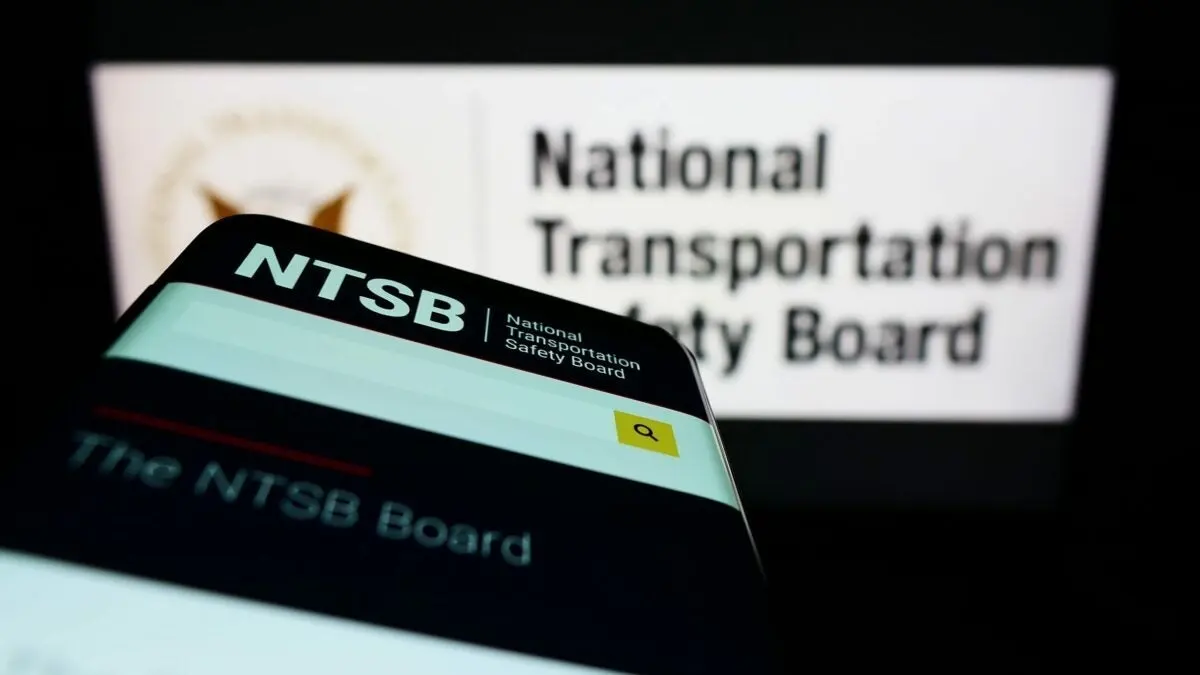
Aviation litigation attorneys frequently make the same early mistake: they treat the NTSB probable cause finding as the technical foundation of their case. It reads like an authoritative conclusion. It names the cause. It assigns factors. It often implicates a party. And it was produced by federal investigators with access to the wreckage, the flight data, and the crew records.
The problem is that it is not admissible as determinative evidence of fault. And opposing counsel knows it. Attorneys who build their theory around the probable cause finding are handing the other side a loaded weapon. Understanding what that finding actually is, what the investigative docket genuinely contains, and where rigorous expert analysis begins is the difference between a case with a defensible technical foundation and one that collapses under a well-placed motion.
What the NTSB Probable Cause Finding Actually Is
The National Transportation Safety Board investigates accidents to improve aviation safety: not to assign civil liability. That distinction is not a legal technicality. It is foundational to understanding how the probable cause finding should be used, and how it cannot.
Under 49 U.S.C. § 1154(b), no part of a final accident report may be admitted into evidence or used in any civil action arising from the accident it concerns. Courts have interpreted this statute to prohibit the use of NTSB probable cause findings as substantive evidence of fault. The Board itself states explicitly in its reports that the findings are not intended to be used in litigation.
The probable cause finding is the Board's conclusion: a distillation of what investigators believed most likely caused the accident based on available evidence. It reflects investigative judgment, not proven fact. It is not subject to cross-examination. The methodology behind it is often not fully disclosed. And it can be wrong. Investigations are conducted under time pressure, with incomplete data, and by professionals whose mandate is safety, not adversarial proof.
When attorneys treat this finding as the technical backbone of a case, they are relying on a document their own expert cannot fully defend under oath — and which opposing counsel can challenge without having to refute the actual evidence.
The Investigative Docket Is a Different Matter Entirely
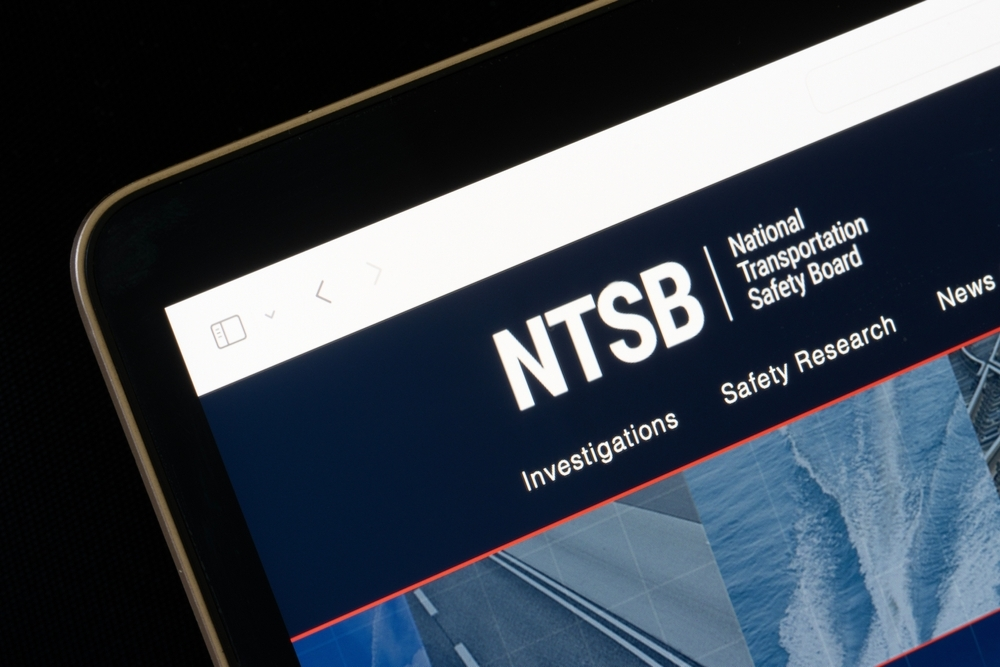
While the probable cause finding is restricted, the underlying investigative record is not. The NTSB public docket is one of the most underused resources in aviation litigation — and one of the most valuable.
The docket typically contains factual reports prepared by NTSB specialists across multiple disciplines: aircraft performance, flight data recorder analysis, cockpit voice recorder transcription, meteorology, air traffic control communications, human performance, structures, systems, and maintenance records. These factual reports document the raw findings (measurements, recordings, test results, and observations) without the interpretive conclusions that make the probable cause finding inadmissible.
This is where the technical case is actually built. A skilled aviation accident investigator working as an expert witness does not rely on the NTSB's conclusion. They work from the same underlying evidence (the FDR data, the CVR transcript, the ATC communications, the maintenance records, the weather products) and develop independent opinions grounded in operational expertise and documented methodology.
That distinction matters in court. An expert who has reviewed and analyzed the primary source data can defend every analytical step under cross-examination. An attorney who has simply pointed to the probable cause finding cannot.
What the Docket Contains and What to Look For
Knowing the docket exists is not enough. The factual reports vary in depth, and the most operationally significant evidence is not always obvious from the document titles. Understanding what each component of the docket provides is essential for building a technically sound case.
Flight Data Recorder and Performance Analysis
The FDR specialist's factual report contains the raw parameter data (airspeed, altitude, vertical speed, heading, control inputs, engine parameters) and the NTSB's performance analysis based on that data. This is often the most technically precise document in the entire docket. It establishes the actual flight path, the actual energy state at key moments, and the actual sequence of control inputs. For pilot decision-making cases, this data is indispensable. It shows what the crew actually did, not what they reported doing.
Cockpit Voice Recorder Transcript
The CVR group factual report contains the transcript of the final minutes of crew communication, interphone, and ambient cockpit audio. The transcript itself is typically released as part of the public docket. The audio recording is protected under 49 U.S.C. § 1154 and generally not released publicly, though courts have sometimes ordered its production. The transcript provides direct evidence of crew resource management, communication patterns, task saturation, and situational awareness: or the absence of it. In human factors analysis, the CVR record is often where the operational picture becomes clearest.
Air Traffic Control Communications and Radar Data
The ATC factual report documents all controller-crew communications and, in most cases, the radar track data showing the aircraft's actual flight path as observed by facility systems. This is particularly critical in cases involving weather deviations, runway incursions, airspace conflicts, and approach accidents. Discrepancies between what ATC cleared, what crews acknowledged, and what the aircraft actually did are often central to causation analysis in runway and approach accident cases.
Weather Products and Meteorological Analysis
The meteorology factual report documents the actual atmospheric conditions along the route of flight and at the destination: PIREPs, METARs, TAFs, SIGMETs, and in some cases, reconstructed atmospheric soundings. Critically, it also documents what weather information was available to the crew at various points in the flight. This is the foundation of weather-related causation analysis. It is not enough to establish that conditions were hazardous. The investigation must determine what the crew knew, when they knew it, and what operationally reasonable action they should have taken.
Maintenance Records and Systems Findings
For accidents involving mechanical failure, airworthiness, or maintenance-related causation, the structures and systems factual reports document physical evidence from the wreckage examination. These reports establish which components failed, in what sequence, and, critically, whether the failure was pre-existing or resulted from impact forces. Maintenance records attached to the docket document the aircraft's operational history, any deferred defects, and the status of applicable airworthiness directives. This record is essential for cases involving operator negligence, inadequate maintenance programs, or component manufacturer liability.
Where Expert Analysis Begins
An experienced aviation expert witness does not start with the probable cause finding and work backward. They start with the primary data and work forward: the same way a competent accident investigator does.
The analytical process begins with the factual record: the flight path data, the crew communications, the weather environment, the aircraft's performance capability, the applicable regulatory standards, and the operator's own procedures. From that record, the expert develops opinions about what occurred operationally, where the safety margin began to erode, what decisions were made and when, and whether those decisions reflected the standard of care expected of a competent pilot operating in that environment.
This is where operational expertise matters. Understanding what a flight crew was facing (not as a passive observer reviewing data after the fact, but as someone who has operated in similar environments under similar pressures) is what separates technically credible expert analysis from post-hoc speculation. The event sequence often develops well before the final outcome. The operational picture, properly analyzed, tells the story of how margin was consumed.
In cases involving corporate or charter operations, that analysis extends to the organizational context. Flight department safety programs, operational culture, training standards, and management oversight are often as relevant as the individual crew's performance on the accident flight. A complete causation analysis addresses both the proximate factors and the systemic ones.
The Legal Relevance of Getting This Right
The practical consequence of relying on the probable cause finding as a case anchor is exposure to a straightforward motion in limine. Opposing counsel moves to exclude the finding, the court grants it, and the attorney's technical narrative disappears. If no independent expert analysis has been developed, the case has no technical foundation.
The correct approach requires retaining an expert with operational depth early: early enough to review the full docket, identify the operationally significant evidence, and develop independent opinions that can survive challenge. For aviation expert witness engagements, the quality of the factual analysis depends directly on the quality of the data reviewed and the operational experience the expert brings to that review.
The probable cause finding may describe what happened. It cannot explain, under cross-examination, why it happened, what the standard of care required, or what a reasonably competent operator would have done differently. That is what expert testimony is for. And it begins with the docket: not the conclusion drawn from it.
Key Takeaways for Aviation Attorneys
- 1The NTSB probable cause finding is not admissible as determinative evidence of fault under 49 U.S.C. § 1154(b). Do not build your case around it.
- 2The investigative docket (the factual reports, FDR data, CVR transcript, ATC records, weather analysis, and maintenance documentation) is available and operationally rich. This is where the technical case is built.
- 3Independent expert analysis developed from primary source data is far more defensible than expert testimony that simply echoes the NTSB's conclusion.
- 4Retain an aviation expert with genuine operational experience early. The most valuable analysis happens before deposition, not during it.
- 5Causation is not a single event. It is a sequence of decisions, conditions, and eroding margins. The full investigative record tells that story. The probable cause finding summarizes it: imperfectly, and inadmissibly.
Aviation Expert Witness and Litigation Support
AeroVerdict provides operational aviation analysis and expert witness consulting for aviation litigation. Engagements begin with a review of the full investigative record, not the probable cause finding, and develop independent, methodology-grounded opinions from primary source data.
If you have a matter involving accident causation, pilot decision-making, or operational standards of care, the analysis starts with the facts.
Request an Expert Case Review
About the Author
Kevin Alvarez
Kevin Alvarez is an ATP-rated Chief Pilot and aviation expert witness with experience in corporate aviation operations, pilot decision-making, FAA compliance, operational risk analysis, and aviation accident investigation. Through AeroVerdict, he provides expert witness and consulting services for attorneys and legal teams.
Full Bio