

For aviation attorneys, the central issue is rarely a single bad decision. It is how safety margins erode step by step until no effective intervention point remains.
In many aviation accident cases, the legal framing starts too late: what was the pilot's final error? From an operational standpoint, that is almost never where the analysis should begin.
A more accurate question is this: when did the decision chain begin to degrade, and which intervention points were missed before the outcome became difficult to reverse?
This broader framework is explored in AeroVerdict's core analysis of pilot decision-making in aviation accidents.
Operational Reality: How Accidents Actually Develop
In real flight operations, accidents involving pilot decision-making usually do not emerge from one isolated act. They develop through a sequence of small choices, tolerated deviations, incomplete cross-checks, and changing conditions that gradually reduce available margin.
By the time the visible event occurs (an unstable approach, runway excursion, fuel exhaustion, controlled flight into terrain, or loss of control) the underlying chain has often been in motion for several minutes, and sometimes much longer.
This pattern is consistent with how aviation accidents actually happen and why isolated "pilot error" explanations are often incomplete.
For attorneys evaluating causation, this matters because pilots do not make decisions in a vacuum. They operate inside a framework of aircraft limitations, company procedures, weather, fatigue, schedule pressure, automation use, ATC interaction, airport environment, and recent operational experience.
This is where human factors in aviation accidents becomes central to legal and operational analysis.

Margin Erosion in Practice
Consider the operational pattern seen in many unstable approach events. The flight may begin with a manageable delay or weather deviation. That leads to a compressed arrival. The crew accepts higher workload in terminal airspace. Descent planning becomes less disciplined. Airspeed remains high. Vertical path control becomes reactive instead of stabilized.
Checklists may be completed late. Runway condition data may be acknowledged but not fully integrated into landing performance thinking. None of those facts alone guarantees an accident. Together, they signal erosion of safety margin.
This same pattern appears in many unstable approach cases and is a common precursor to runway excursion and landing accident analysis.
Margin in aviation is not abstract. It consists of time, altitude, energy control, runway available, weather tolerance, crew capacity, and procedural discipline.
Once enough of that margin is consumed, the crew is no longer managing the flight proactively. They are attempting to recover it while the aircraft continues moving toward the point of no practical return.

Decision Chain Analysis: Where Intervention Should Occur
The failure analysis in pilot decision-making cases should focus on identifiable intervention points.
Strategic Phase
Before the aircraft reaches a high-workload phase, did the pilot or crew realistically assess the conditions? Was the approach briefed with current runway, weather, and performance information? Was there a genuine alternate plan, or only a nominal one?
These questions are especially important in cases involving weather decision-making in aviation accidents.
Tactical Phase
As conditions changed, did the crew adapt early enough? If the approach became unstable, was that recognized in time? If landing distance margins tightened due to tailwind, contamination, excess speed, or delayed touchdown, did the crew update the plan — or continue using an outdated assumption?
Procedural Phase
Most operators have explicit gates: stabilized approach criteria, go-around triggers, crosswind limits, landing performance standards, fuel reserve thresholds, and callout requirements.
These points matter in litigation because they convert general judgment into measurable conduct. If objective criteria existed and were not followed, the question becomes whether the deviation was isolated, normalized, or implicitly accepted by training and culture.
FAA safety guidance on stabilized approaches and approach-and-landing risk management can provide useful reference points when evaluating operational standards: Federal Aviation Administration.
Interpersonal Phase
In multi-crew operations, was there effective challenge-and-response in the cockpit? Did the monitoring pilot identify trend information early enough? Was there reluctance to challenge the flying pilot, especially under time pressure or in a high-status cockpit?
In single-pilot operations, the equivalent question is whether risk controls that substitute for crew challenge (automation discipline, conservative personal minimums, checklist use, and diversion planning) were actually in place.
Commitment Phase
Many accidents occur after the flight should already have transitioned from salvage to rejection of the plan. The operational issue is not merely that a go-around or diversion was available. It is whether the crew recognized, at the right time, that continuation had become the higher-risk option.
This is the operational foundation of continuation bias in aviation accident analysis.

Legal Analysis: Causation Versus Outcome
For aviation attorneys, pilot decision-making must be analyzed as a chain of causation, not as a character judgment. The right inquiry is not whether the pilot was generally competent or experienced, but whether the operational decisions at each stage were consistent with available information, training, standard procedures, and reasonable professional judgment.
What Information Was Available, and When?
Accident analysis is distorted when later-developed facts are projected backward. A proper evaluation distinguishes between what was knowable in real time and what only became obvious after the event.
What Margins Were Actually Available?
A common misunderstanding in unstable approach and runway excursion cases is the assumption that regulatory compliance alone establishes safe operation. It does not.
A landing may be technically permissible on paper while leaving little operational tolerance for float, delayed touchdown, degraded braking, late configuration changes, or incomplete runway condition assessment.
What Role Did Training, Supervision, and Culture Play?
If a pilot routinely operated in ways that compressed margins — accepting unstable approaches, landing long, continuing despite performance uncertainty, or treating SOP gates as flexible — then the case may extend beyond individual error.
Training quality, recurrent checking, line standards, dispatch support, and management pressure may all become relevant. This overlaps with broader issues in corporate aviation safety and flight department risk management.
Where Is the True Causal Link?
In aviation litigation, causation is often misunderstood because the final visible event dominates attention.
A runway overrun may appear to result from braking failure, but the causal chain may have started with a late descent, excessive approach speed, unstable flare, and touchdown well beyond the intended zone.
Similarly, controlled flight into terrain may be framed as a navigation lapse, when the more accurate analysis begins with weather continuation bias, incomplete briefing, and failure to abandon a deteriorating plan.
This is why understanding how aviation accident investigations work is essential when evaluating pilot decision-making, causation, and liability.
Why This Matters in Litigation
The most defensible expert opinions are built on sequence, margin, and decision opportunity.
The issue is not simply what happened. It is when the operation became unsafe by degrees, and which safeguards failed to interrupt that progression.
That distinction matters because aviation cases often involve multiple layers of responsibility: pilot judgment, procedural design, training quality, operational supervision, dispatch support, maintenance history, weather interpretation, and organizational risk tolerance.
Conclusion
Pilot decision-making in aviation accidents is rarely a story of one moment. More often, it is a pattern of shrinking options, tolerated assumptions, and missed intervention points.
For attorneys, the strongest analysis usually comes from reconstructing that pattern with operational precision: what the crew knew, what margins remained, which standards applied, and when continuation ceased to be the reasonable course.
For a broader legal and operational framework, see AeroVerdict's analysis of pilot decision-making, causation, and liability in aviation accidents.
Expert Witness Perspective
This is the level at which aviation cases should be evaluated in litigation: not by isolated actions, but by operational sequence, margin erosion, and decision structure.
For attorneys requiring independent analysis of pilot conduct, operational decisions, or accident causation, AeroVerdict provides aviation expert witness services for litigation support, case review, expert reporting, and deposition preparation.
About the Author
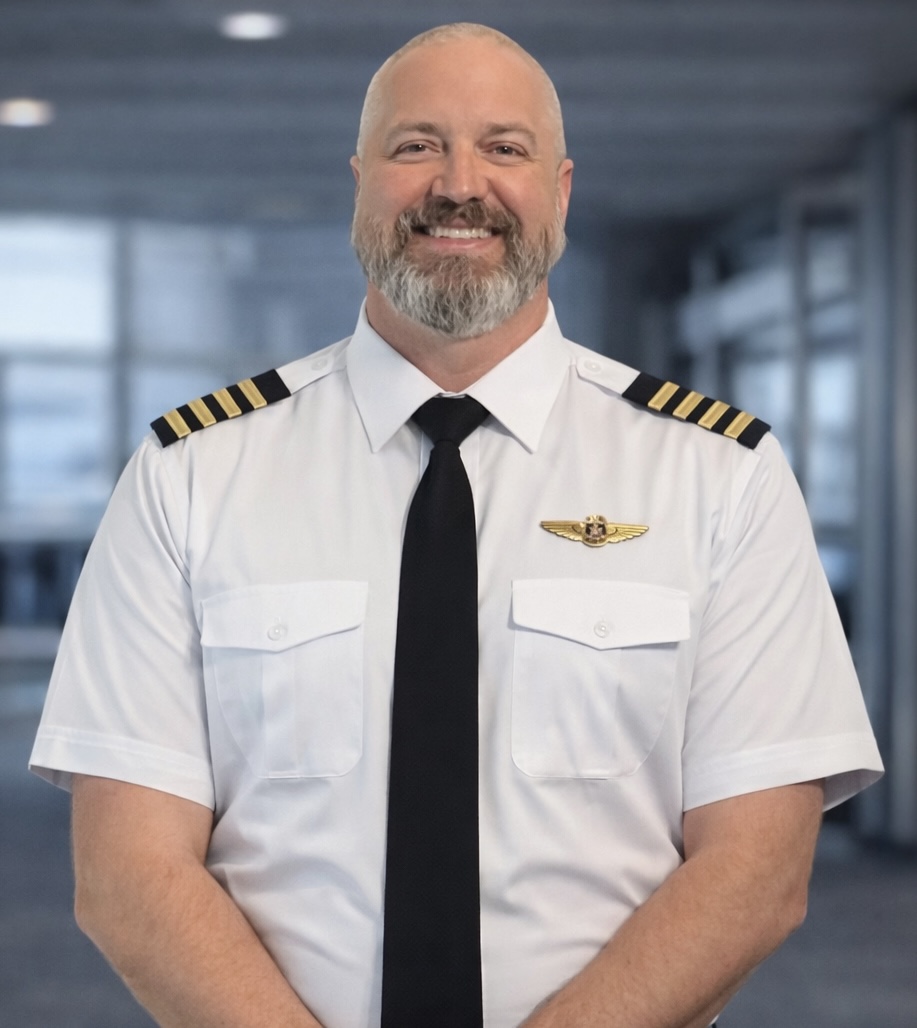
Kevin Alvarez
Kevin Alvarez is a Chief Pilot with extensive corporate aviation leadership experience. Through AeroVerdict, he provides aviation consulting and expert witness services related to aircraft accident investigation, corporate aviation operations, pilot decision-making, and FAA regulatory compliance.
Full BioAttorneys evaluating aviation liability cases can review our aviation expert witness services for information on how independent operational analysis and expert testimony support aviation litigation.