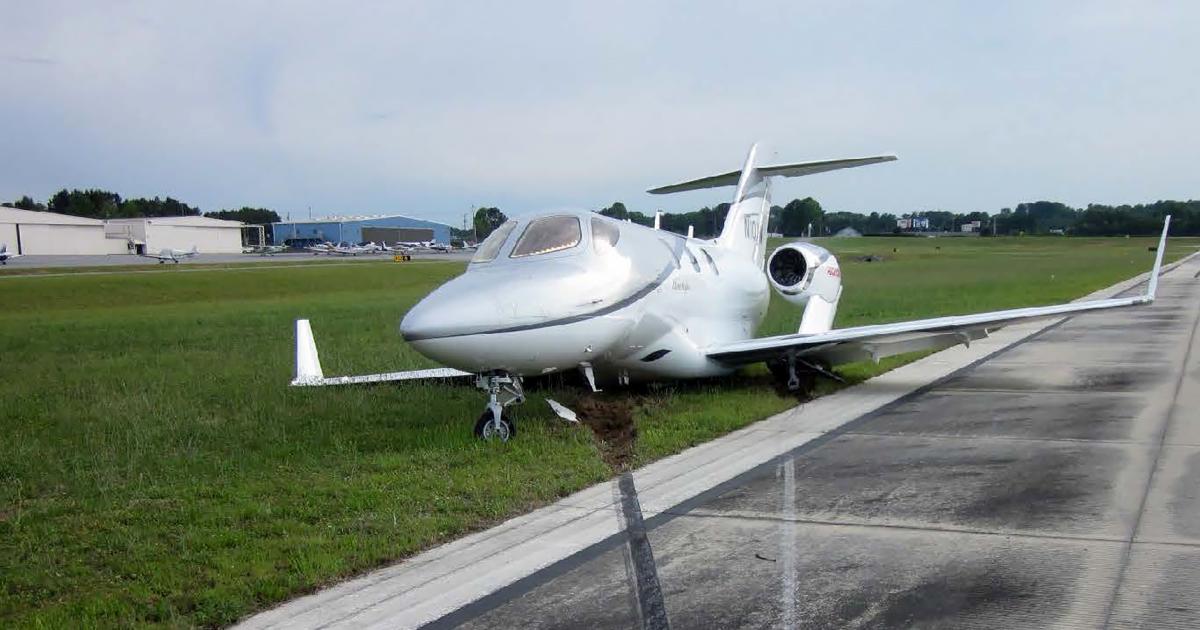
Runway excursions remain one of the most persistent categories of landing accidents in commercial and business aviation. For aviation attorneys, these events often raise a central question: was the excursion primarily the result of environmental conditions, aircraft performance limitations, or operational decision-making?
In many cases, the answer lies in the interaction between all three. Unstable approach criteria, touchdown location, runway condition, and eroded performance margins often become critical factual and liability issues.
This article should be read alongside AeroVerdict's broader analysis of how aviation accidents actually happen, because runway excursions usually develop through a sequence of operational decisions rather than a single isolated error.
Operational Pathway: From Unstable Approach to Runway Excursion
A runway excursion generally occurs when an aircraft departs the runway surface, either laterally or longitudinally, during takeoff or landing. On landing, the common operational pathway is familiar: the aircraft arrives high, fast, long, or otherwise outside stabilized approach gates; touchdown occurs beyond the intended touchdown zone; braking action is degraded or overestimated; and the remaining stopping distance proves insufficient.
From a legal and technical standpoint, each link in that chain deserves close scrutiny.
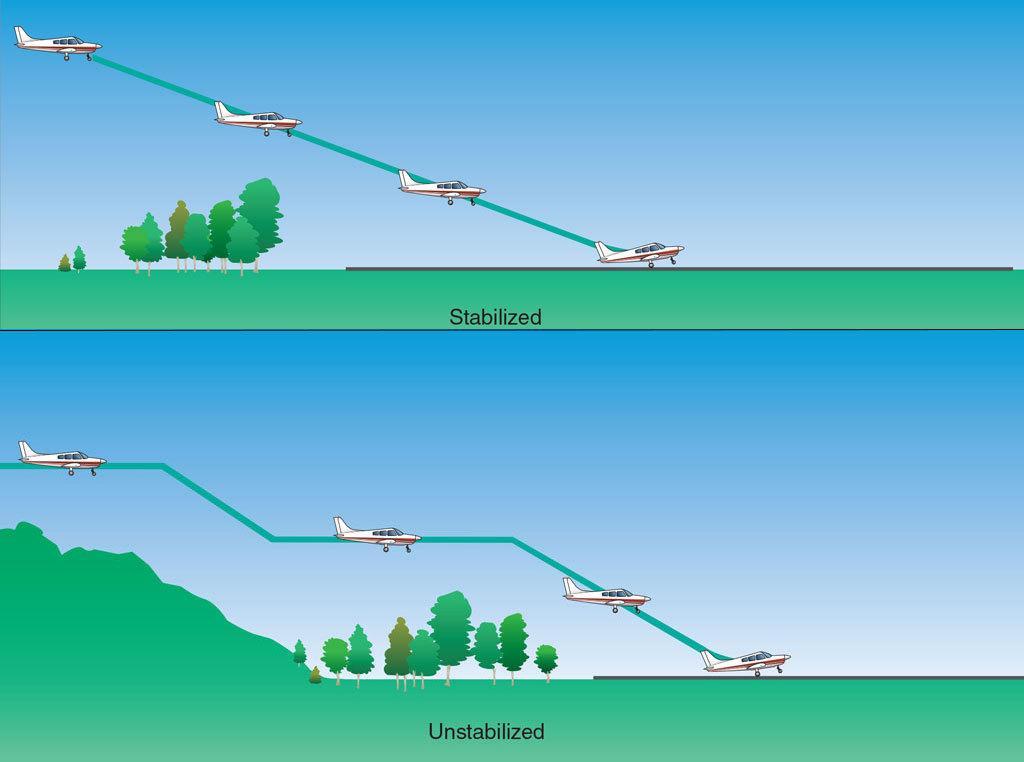
Unstable approach is frequently the earliest detectable precursor. Standard operating procedures across most operators require the aircraft to meet stabilized approach criteria by a defined altitude, often 1,000 feet above airport elevation in instrument conditions and 500 feet in visual conditions.
Typical parameters include correct lateral and vertical path, target approach speed within tolerance, appropriate thrust setting, landing checklist completion, and a descent rate within prescribed limits unless specifically briefed.
When those criteria are not met, a go-around is ordinarily required. In post-accident review, attorneys should examine whether the crew recognized instability, announced deviations, and complied with mandatory go-around policy.
This is directly connected to AeroVerdict's analysis of unstable approaches and operational causes.
Why Flight Data Often Shows a Progressive Breakdown
Flight data and cockpit voice records often reveal that unstable approaches are not singular events. They are progressive deviations.
Excess airspeed on final increases landing distance, especially when combined with float. A high-energy approach may also compel a longer flare, delayed touchdown, and reduced braking margin. A tailwind component, even within published limits, can materially increase stopping distance.
If the aircraft touches down well beyond the touchdown zone, the landing distance available may become functionally inadequate regardless of the certified runway length.
These issues also overlap with broader pilot decision-making and causation analysis, because the critical decision may occur before the aircraft reaches the runway environment.
Runway Performance Margin
Runway performance margin is a core technical issue in runway excursion litigation. Published landing distance figures are not guarantees of operational stopping capability under all real-world conditions.
Landing performance data is based on assumptions regarding aircraft weight, wind, runway slope, touchdown point, braking configuration, thrust reverser use where applicable, and runway surface condition.
The legal analysis becomes more complex when dispatch data, onboard calculations, and actual conditions diverge.
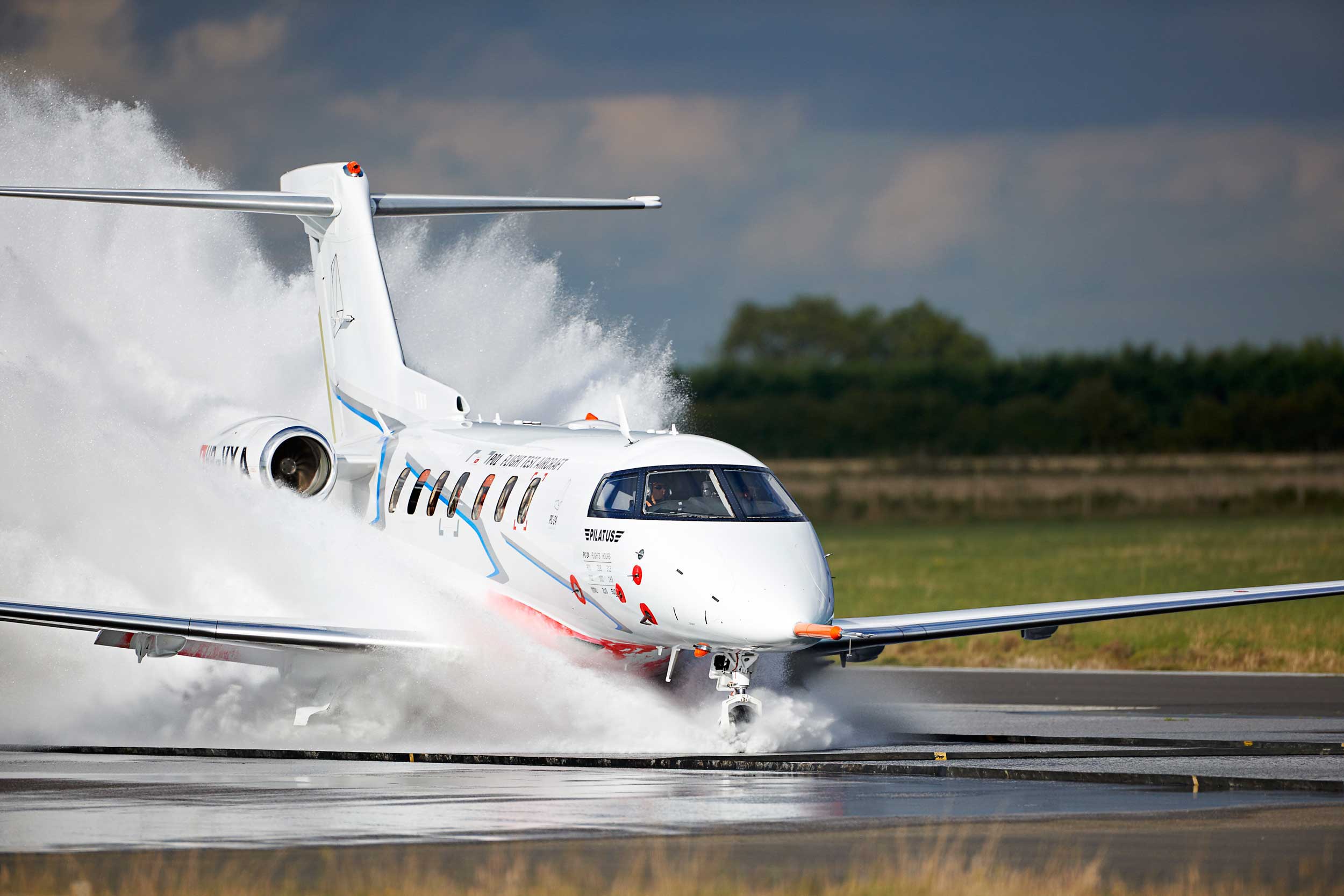
A wet or contaminated runway, degraded braking action, hydroplaning risk, delayed spoiler deployment, inoperative systems, or incorrect autobrake selection can quickly consume the margin that appeared acceptable on paper.
FAA runway safety and landing performance guidance can provide useful reference material when evaluating runway excursion risk and operational expectations: FAA Runway Safety.
Compliance Versus Operational Adequacy
For attorneys evaluating liability, one important distinction is between compliance and adequacy.
A flight may have nominally complied with dispatch procedures yet still arrived with little practical stopping margin. That creates questions about operator training, safety culture, operational control, and whether company practices encouraged continuation bias.
Important questions include:
- Was the crew trained to treat landing performance conservatively?
- Were contaminated runway assessments updated in a timely manner?
- Did the operator use manufacturer data, regulatory minimums, or more restrictive internal factors?
- Did company culture encourage continuation when a go-around was the safer option?
These issues may affect negligence analysis and the allocation of fault among the crew, operator, manufacturer, airport authority, or air traffic services.
They also overlap with corporate aviation safety and flight department risk management, especially when policies, training, or operational pressure influence cockpit decision-making.
Airport and Infrastructure Conditions
Airport and infrastructure conditions can also shape both causation and severity.
Runway grooving, friction characteristics, standing water, snow or slush accumulation, inaccurate or stale braking-action reports, lighting, signage, and runway end safety areas may all influence the outcome.
In overrun cases, attorneys should review whether declared distances were properly published, whether NOTAMs accurately described runway condition, and whether arresting systems or engineered material arresting systems were present, required, or relevant.
Poor reporting of runway contamination can materially distort crew decision-making and landing distance calculations.
Weather interpretation is often part of this review, particularly where precipitation, changing visibility, wind shifts, or braking action reports affected the crew's landing plan. For more on that issue, see weather and aviation accident risk analysis.
Evidentiary Review and Reconstruction
From an evidentiary perspective, runway excursion cases are often won or lost on reconstruction of the approach-and-landing sequence.
Key materials may include:
- Flight data recorder downloads
- Quick access recorder data
- Electronic flight bag landing calculations
- Aircraft communications addressing and reporting system messages
- Dispatch release packages
- Meteorological reports
- Braking-action reports
- Operator manuals
- Training records
- Airport maintenance logs
The timeline is especially important: when conditions changed, when the crew became aware of them, what landing data they used, and whether a go-around remained operationally feasible.
This type of reconstruction is consistent with the broader investigative framework discussed in how aviation accident investigations work.
Expert Review Questions in Runway Excursion Cases
Expert review typically focuses on several recurring questions:
- Was the approach stabilized at the required gates?
- Did speed, descent rate, or glidepath deviations materially affect touchdown point?
- What was the actual touchdown distance from the threshold?
- What runway condition data were available, and were they reliable?
- What landing distance margin existed before and after updated weather or braking reports?
- Did crew technique, automation mode selection, or delayed braking deployment contribute?
- Did operational pressure or company practice discourage a go-around?
These questions help separate superficial explanations from defensible operational analysis.
Causation and Legal Framework
For plaintiff and defense counsel alike, the most effective analysis avoids oversimplifying these accidents as merely "pilot error" or "bad weather."
Runway excursions usually develop from layered operational decisions made under changing conditions. The unstable approach is often the visible warning sign. The inadequate runway performance margin is frequently the mechanism that turns deviation into accident.
For aviation attorneys, that framework is practical. It helps identify where foreseeability, standard of care, policy compliance, human factors, and systems design intersect.
In litigation or pre-suit investigation, focusing early on stabilized approach compliance and realistic landing performance margin will often provide the clearest path to understanding causation, exposure, and defensibility.
For related analysis, see AeroVerdict's overview of common causes of private aircraft accidents.
Expert Witness Perspective
Runway excursion cases require operational reconstruction, not just outcome review. The central questions involve approach stability, touchdown location, runway condition, braking performance, crew decision-making, and whether available safeguards were used at the right time.
For attorneys requiring independent review of runway excursion causation, landing performance, pilot conduct, or operational decision-making, AeroVerdict provides aviation expert witness services for litigation support, case review, expert reporting, and deposition preparation.

About the Author
Kevin Alvarez
Kevin Alvarez is a Chief Pilot with extensive corporate aviation leadership experience. Through AeroVerdict, he provides aviation consulting and expert witness services related to aircraft accident investigation, runway excursion analysis, corporate aviation operations, pilot decision-making, and FAA regulatory compliance.
Full BioAttorneys evaluating aviation liability cases can review our aviation expert witness services for information on how independent operational analysis and expert testimony support aviation litigation.