Unstable approaches remain one of the most persistent precursors to runway overruns, hard landings, runway excursions, and controlled flight into terrain. For aviation attorneys, they are also a recurring litigation focal point because they sit at the intersection of pilot judgment, company policy, training adequacy, operational pressure, airport environment, and aircraft performance margins.
An unstable approach is not merely a piloting issue. It is an operational event with legal significance. In post-accident and post-incident cases, the central question is rarely limited to whether the crew complied with stabilized approach criteria. The deeper inquiry is whether the operator created, tolerated, or failed to mitigate the conditions that made an unstable approach more likely and a go-around less likely.
That broader inquiry is consistent with how aviation accident investigations are typically evaluated: not as a single error, but as a sequence of decisions, defenses, and missed intervention points. This is especially important in cases involving runway excursions and landing accidents, where the final outcome often reflects margin that was consumed much earlier in the flight.
What Makes an Approach Unstable?
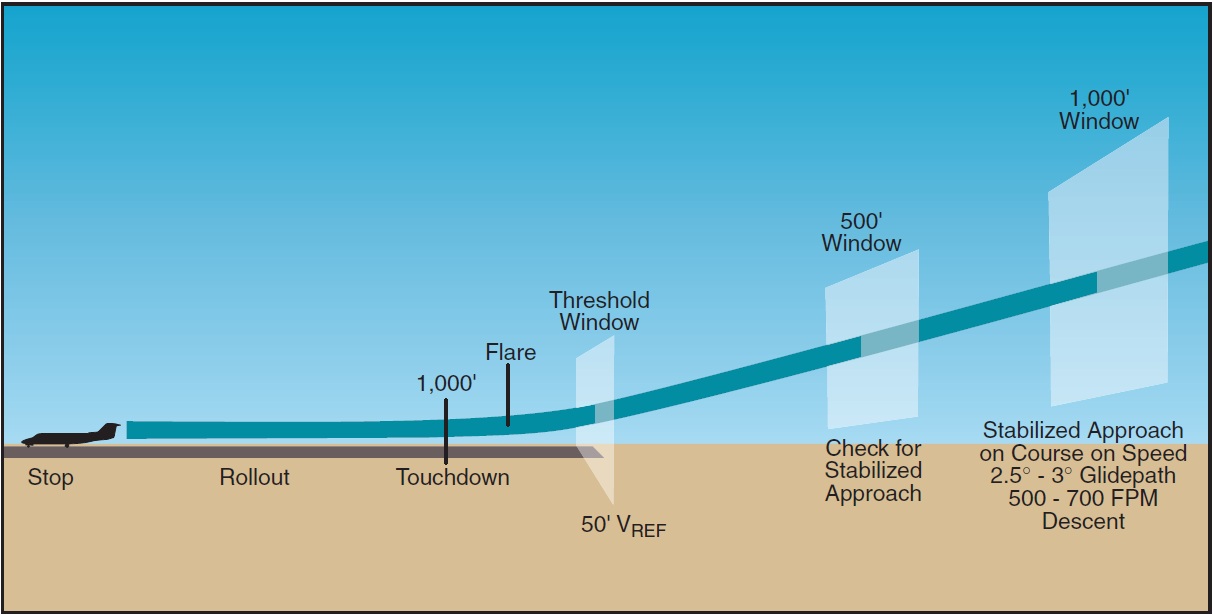
From a technical standpoint, a stabilized approach generally requires the aircraft to be on the correct lateral and vertical flight path, in the proper landing configuration, at the target speed within prescribed tolerances, with a descent rate and thrust setting appropriate for landing, by a specified gate altitude.
Operators often use 1,000 feet above airport elevation in instrument meteorological conditions and 500 feet in visual conditions as decision gates. If the aircraft fails to meet those criteria, a go-around is typically required. FAA guidance and industry safety material have repeatedly emphasized stabilized approach criteria as a key defense against approach-and-landing accidents.
For attorneys, those gates matter because they create measurable operational benchmarks. Flight data, quick access recorder data, FDR information, CVR content, SOPs, flight crew operating manuals, and training records can all be evaluated against these objective criteria.
In many cases, unstable approach analysis becomes a timeline exercise: when did the approach become unstable, what cues were present, what options remained, and why was the approach continued?
Operational Causes of Unstable Approaches
Operational causes typically fall into several recurring categories.
Energy Mismanagement
Energy mismanagement is a common driver. Excessive airspeed on final often leads to long flare distances and touchdown beyond the intended landing zone. A fast approach consumes runway margin before the wheels ever contact the surface.
Even a modest speed increase can significantly increase landing distance because kinetic energy rises with the square of speed. In legal and technical review, this point is critical. A runway that appears sufficient on paper may no longer provide adequate stopping margin once excess speed, delayed touchdown, wet contamination, tailwind, or degraded braking effectiveness are added.
Vertical Path Instability
Vertical path instability frequently contributes to approach risk. A high and fast profile may prompt aggressive descent rates, power changes, or configuration changes late in the approach. These corrections can increase workload, reduce situational awareness, and compromise adherence to stabilized approach standards.
In some events, crews may salvage lateral alignment while still remaining outside company descent-rate limits or speed tolerances. That distinction matters because an approach can appear aligned with the runway while still being operationally unstable.
Environmental and Airport Factors
Adverse environmental and airport factors often play a decisive role. Tailwind, gusting conditions, windshear, contaminated runways, shortened landing distance available, displaced thresholds, visual illusions, sloped runways, and challenging terrain can all erode runway performance margins.
In litigation, these elements are especially important because they may implicate dispatch decision-making, operational control, NOTAM management, airport data accuracy, and crew briefing adequacy. They also overlap with broader issues discussed in weather decision-making for aviation attorneys.
Organizational and Cultural Factors
Organizational and cultural factors can be as important as aircraft handling. Operators may have a written go-around policy but a tacit expectation to avoid delays, diversions, missed approaches, or fuel penalties. If a carrier informally rewards approach continuation and treats go-arounds as failures, that culture may influence crew decision-making.
Attorneys should examine whether training reinforced the mandatory nature of stabilized approach gates or whether line operations reflected a more permissive practice. This is where unstable approach cases often connect to human factors in aviation accidents and broader pilot decision-making and causation analysis.
The Gap Between Written Procedures and Actual Operations
Unstable approach cases are often valuable from an evidentiary perspective because they reveal the gap between documented procedures and actual operational behavior. Manuals may state that an unstabilized approach requires immediate discontinuation, yet FDM data may show repeated unstable approaches across the fleet with no meaningful intervention.
If operator safety systems captured the trend but failed to mitigate it, that can materially affect liability analysis. The question becomes not only whether the accident crew continued an unstable approach, but whether the organization had prior notice of similar events and failed to act.
This is one reason unstable approach analysis can become central to corporate aviation safety and flight department risk management. The legal issue may extend beyond cockpit execution into training, oversight, safety reporting, and operational control.
Runway Performance Margins and Landing Accident Risk
Runway performance margins deserve particular attention. Many accident narratives focus heavily on the final seconds before touchdown, but the more important analysis often starts earlier: what margin existed before the approach began degrading, and how quickly was it consumed?
Runway margin is not static. It is a dynamic reserve affected by aircraft weight, wind component, runway surface condition, elevation, slope, braking action, reverse thrust availability, flare distance, touchdown point, and deceleration technique.
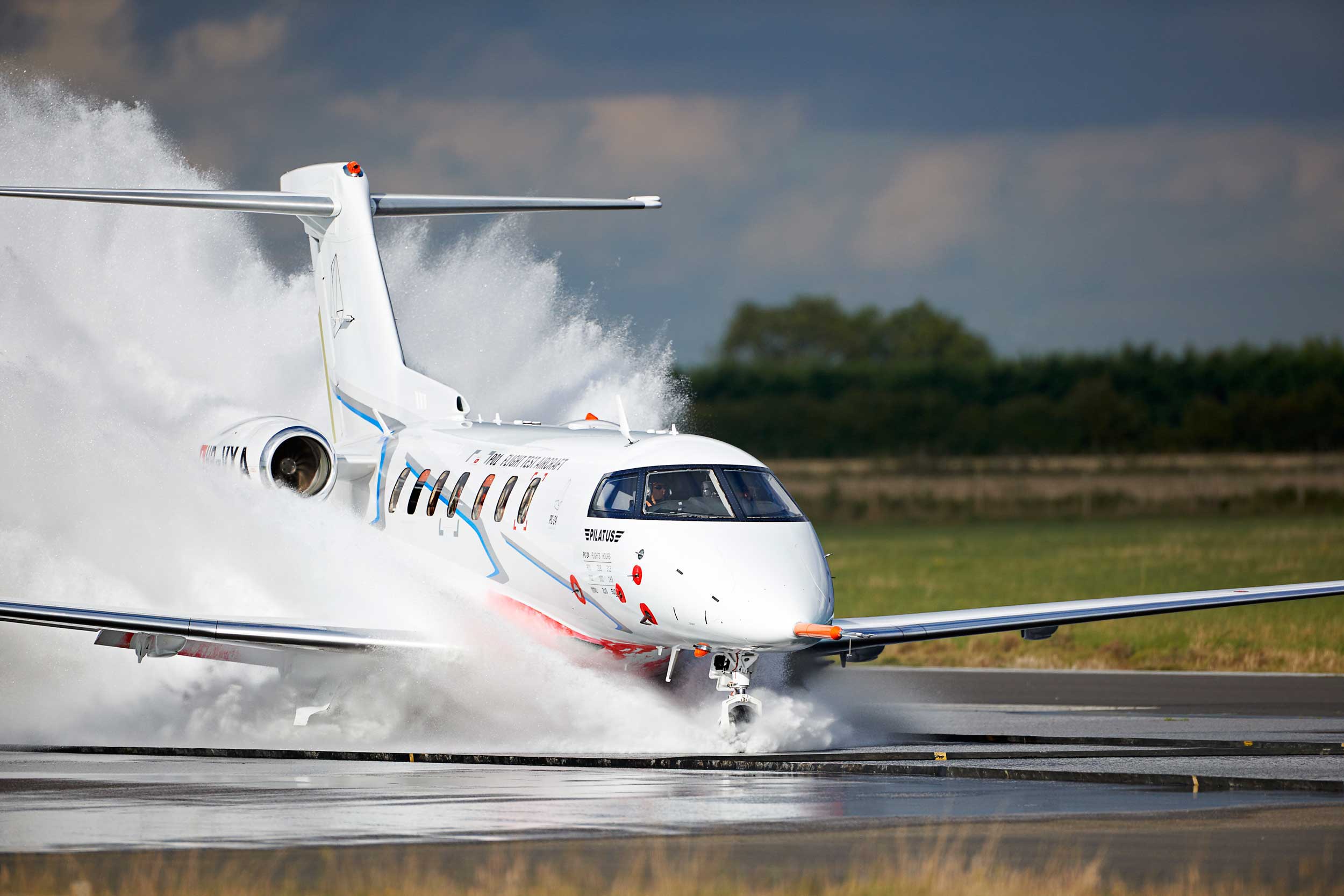
An unstable approach reduces that reserve in predictable ways. A high approach may delay touchdown. A fast approach increases stopping distance. A tailwind raises groundspeed. A wet or contaminated surface reduces braking effectiveness. Combined, these factors can transform a nominally acceptable landing into an overrun scenario even when the runway length itself appears adequate under standard calculations.
Key Legal Questions in Unstable Approach Cases
For attorneys, unstable approach analysis creates several important lines of inquiry:
- Were landing performance calculations based on actual conditions or idealized assumptions?
- Did the crew receive accurate and timely runway condition information?
- Did dispatch, flight planning, or operational control account for contamination, tailwind, or braking degradation?
- Did company SOPs clearly prohibit continuation below stabilized approach gates?
- Were prior unstable approach events tracked through safety management systems or FOQA/FDM programs?
- Did training address the interaction between unstable approach continuation and runway excursion risk?
These questions matter because unstable approach litigation is rarely confined to a single cockpit decision. It often expands into issues of foreseeability, safety management, standard of care, and systemic risk control.
Investigative and Legal Analysis
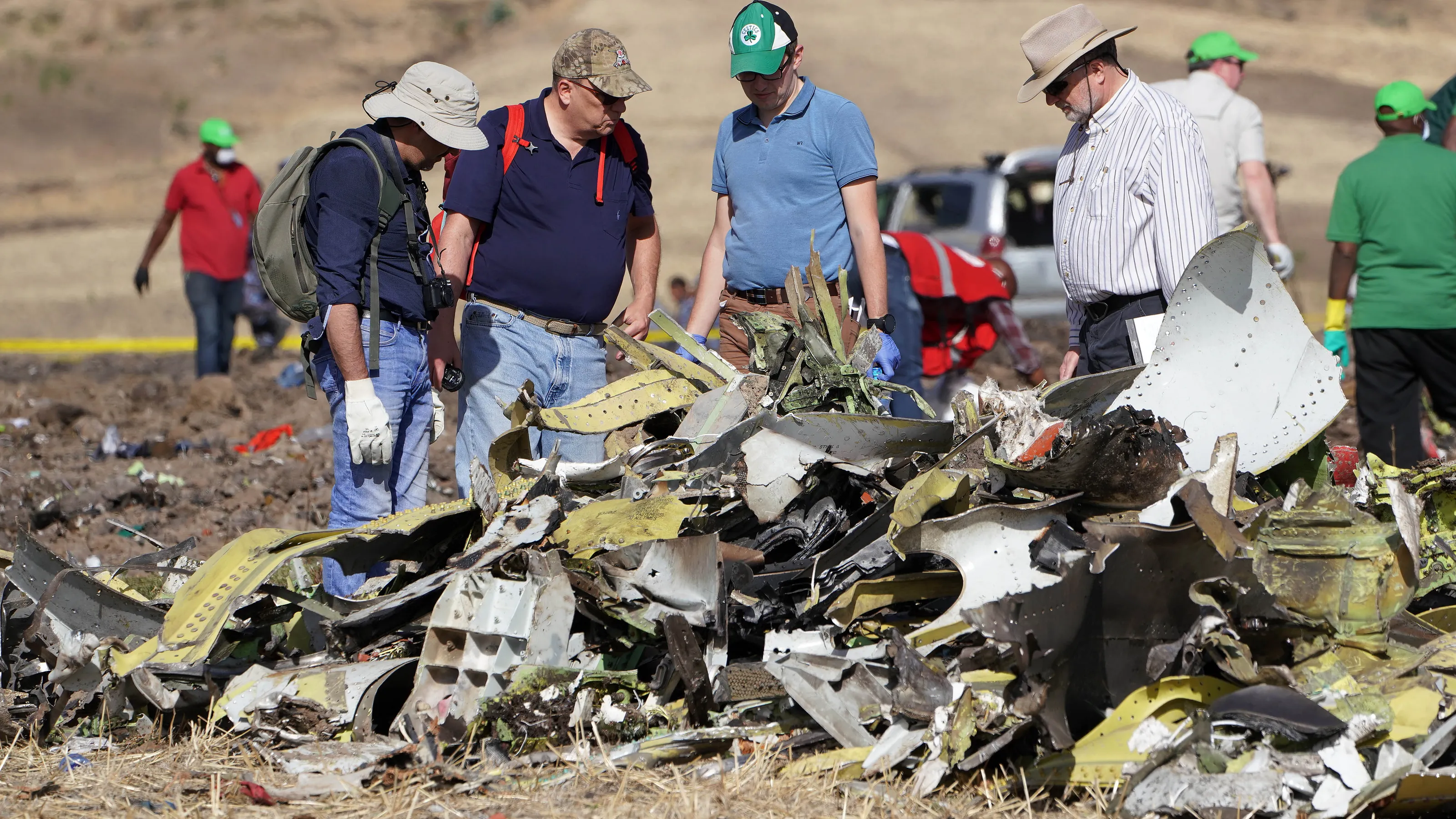
From a causation standpoint, unstable approach cases require disciplined differentiation between initiating factors and terminal events. A runway overrun may be described as a braking or touchdown-location event, but the operational chain may have begun with approach instability much earlier.
Likewise, a hard landing may be framed as an improper flare, while underlying data may show an unstable vertical profile, excessive sink rate, late power application, or destabilizing wind conditions. The legal analysis becomes stronger when counsel can connect final-event dynamics to upstream operational decisions and margin erosion.
Documentation is central. Key materials may include the operator's stabilized approach policy, aircraft performance manuals, runway condition assessments, training syllabi, line check records, SMS reports, FOQA exceedance criteria, dispatch release data, and crew communications concerning weather, fuel, alternates, and approach planning.
Where available, data-driven reconstruction of speed, descent rate, thrust, configuration, touchdown point, and stopping performance can be highly persuasive. NTSB Aviation Accident Reports and docket materials may also provide critical factual support when evaluating approach instability, runway performance, and operational decision-making.
Why Unstable Approach Analysis Matters for Aviation Attorneys
For plaintiff and defense counsel alike, unstable approaches demand both technical precision and operational context. The issue is not simply whether the approach was unstable. The issue is why it became unstable, whether appropriate barriers existed, whether those barriers were used, and how much runway performance margin remained once instability developed.
In that sense, unstable approaches are not isolated deviations. They are measurable breakdowns in layered safety defenses. For aviation attorneys, understanding those layers is essential to evaluating liability, causation, standard of care, and the adequacy of operational risk management.
When approach instability is viewed through the lens of operational causes and runway performance margins, the legal picture becomes clearer: the event at touchdown is often only the final manifestation of a much earlier loss of margin.
Need operational analysis for an aviation case?
AeroVerdict provides aviation expert witness support focused on pilot decision-making, operational risk, accident causation, runway performance, and flight department safety practices.
Learn more about AeroVerdict expert witness services
About the Author
Kevin Alvarez
Kevin Alvarez is a Chief Pilot with more than a decade of leadership experience in corporate aviation operations. He has accumulated thousands of hours operating advanced business aircraft and has conducted international flight operations across North America, Europe, Mexico, Canada, and the Caribbean. Through AeroVerdict, he provides aviation consulting and expert witness services related to aircraft accident investigation, corporate aviation operations, pilot decision-making, and FAA regulatory compliance.
Full Bio