
Weather events in aviation are rarely caused by weather alone. For attorneys evaluating pilot judgment, operator responsibility, dispatch support, or accident causation, the central question is usually not whether adverse weather existed. The more useful question is when the operational picture became sufficiently clear that a different decision was required.
That distinction matters because aviation accident analysis should not stop at the final maneuver. In many cases, the outcome is shaped by a sequence of earlier judgments involving forecast interpretation, fuel planning, runway performance, alternate selection, crew workload, and the willingness to reset the plan as conditions change. This is where weather-related aviation accident analysis often becomes legally significant.
Understanding that sequence, and where it broke down, is the core task in weather-related aviation litigation.
Weather Decisions Are Usually a Sequence, Not a Single Go/No-Go Call
In real-world flight operations, weather decision-making is not one isolated decision. It is a series of judgments made with changing information, imperfect forecasts, operational pressure, fuel considerations, schedule expectations, aircraft capability limits, and the human tendency to normalize deteriorating conditions one step at a time.
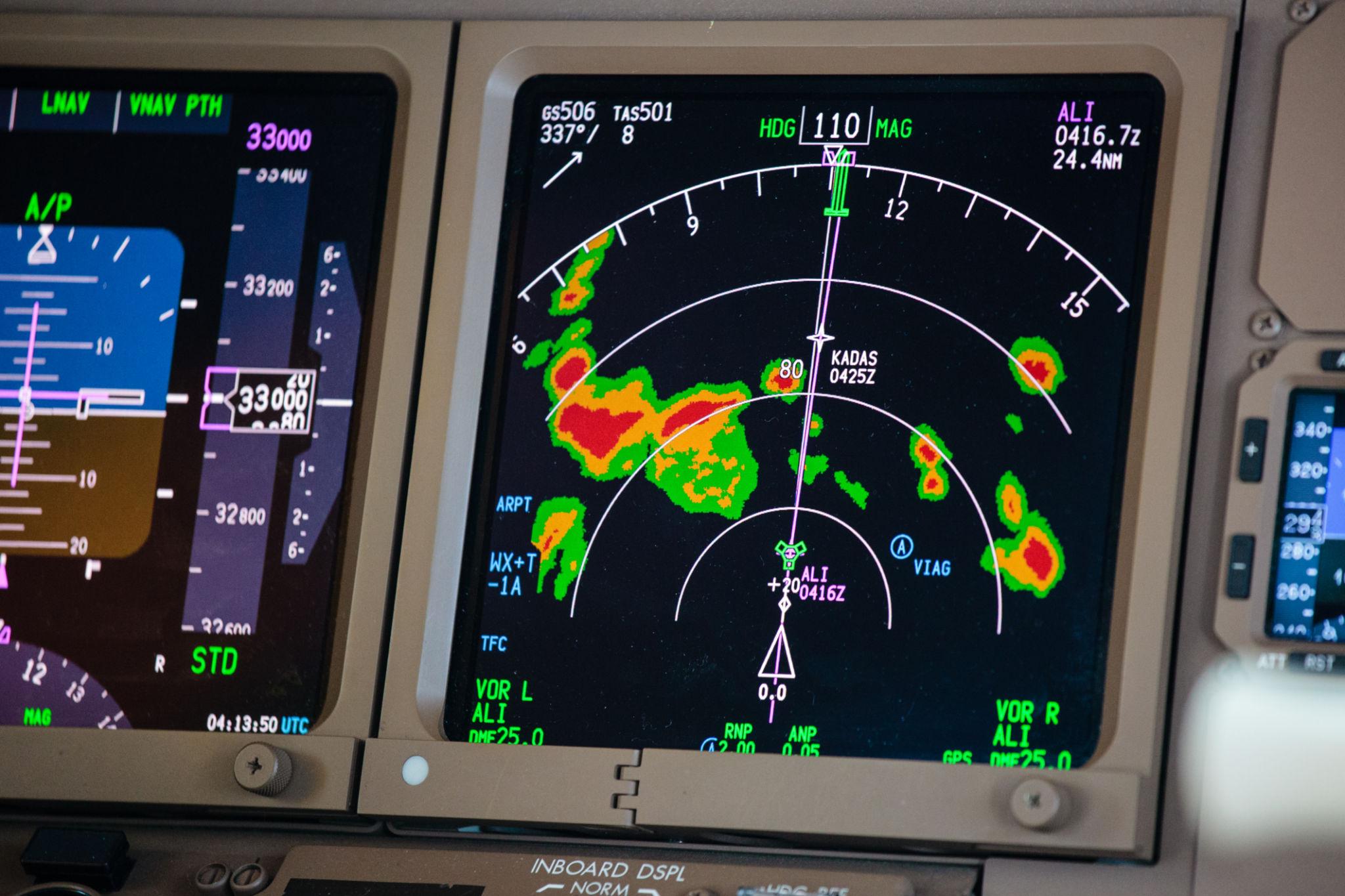
That sequence often begins with forecast interpretation gaps. A forecast may be technically legal for dispatch or departure, yet operationally unstable. Ceiling and visibility trends may be moving in the wrong direction. Convective timing may be uncertain but compressing. Winds may remain within reported limits while runway contamination, braking action, crosswind technique requirements, or missed approach complexity materially reduce usable margin.
From an operational standpoint, this is where the analysis typically begins: not with whether the crew could legally depart, but whether the crew, dispatcher, or operator correctly interpreted how much margin actually existed.
Experienced operators do not read a TAF, METAR, radar image, or winds aloft product in isolation. They build a composite risk picture. They ask whether forecast confidence is high or low, whether conditions are improving or deteriorating, whether alternates are genuinely viable, and whether the flight can absorb one additional complication without crossing into a narrow-margin outcome.
How Weather Risk Begins Before Takeoff
In many aviation weather cases, margin erosion begins before the aircraft ever leaves the ground. A destination forecast near alternate minimums may be treated as manageable. A line of weather may be expected to pass before arrival. A braking action report may be accepted without enough attention to how quickly contaminated runway performance can degrade.
None of these decisions is necessarily unreasonable by itself. The problem is cumulative. Each assumption consumes margin.
By the time the aircraft is airborne, the crew may already be operating inside a compressed decision space. Fuel reserves may satisfy regulation while no longer supporting meaningful strategic flexibility. The destination may remain technically available while no longer providing a stable operational margin for arrival.
A diversion that would have been straightforward earlier may become operationally unattractive later because of passenger expectations, airport support limits, crew duty constraints, or company pressure — whether explicit or implicit. This is one reason weather cases often overlap with broader issues of pilot decision-making, causation, and liability.
The Weather Decision Chain: Where Breakdowns Usually Occur
The decision chain in weather-related aviation accidents often breaks down in identifiable stages. These stages help attorneys separate a difficult weather environment from an operational failure to recognize, reassess, or respond to changing risk.
Forecast Interpretation
The crew, dispatcher, or operator may rely too heavily on reported conditions rather than trend analysis. This is especially important when dealing with convective development, freezing precipitation, mountain obscuration, gust spread, contaminated runways, or rapidly changing coastal weather.
The question is not merely what was reported. The better question is what a competent operator should have reasonably anticipated based on the information available at the time.
Planning Gap
Alternate selection may appear compliant on paper while offering little practical protection. Fuel planning may not account for holding, rerouting, approach delays, or a second weather-driven diversion. Arrival runway analysis may not adequately reflect tailwind exposure, crosswind variability, braking degradation, or increased workload associated with low-visibility or unstable conditions.
These issues are often central in evaluating whether the operation maintained adequate safety margins or simply met minimum regulatory requirements.
Execution Problem
Once the weather picture begins to deteriorate in flight, crews may continue toward the destination based on prior assumptions rather than current operational reality. This is often where assumptions break down under scrutiny.
Continuing an approach because the airport remains technically open is not the same as arriving with adequate operational margin. Legal availability and prudent execution are not interchangeable concepts.
Failure to Reset
There is frequently a failure to update the decision model after new information arrives. A poor pilot report, worsening surface observation, updated SIGMET, braking action downgrade, wind shift, or increased approach workload should trigger a fresh assessment.
In litigation, this becomes a critical point: whether the operator recognized changing risk or simply continued along the original plan.
Arrival and Approach: Where Weather Margins Become Visible
Margins often erode most visibly during arrival and approach. A forecast that looked manageable at dispatch can become operationally hazardous when paired with high workload, late runway changes, vectoring delays, turbulence, windshear advisories, contaminated pavement, or an unstable final segment.
By then, the crew may be making short-cycle decisions under pressure. Those late decisions often attract legal attention, but they usually sit on top of a much earlier chain of compromised assumptions.
This is why weather cases frequently connect to unstable approach analysis, runway excursion causation, and continuation bias. The final event may appear sudden, but the operational setup often developed over time.
Legal Analysis: Weather Presence Is Not the Same as Operational Causation
For attorneys, weather cases require separating meteorological presence from operational causation. Bad weather alone does not explain an event. The analysis must identify when information became actionable, who had responsibility to evaluate it, what margins remained, and whether the decision-makers appreciated how quickly those margins were shrinking.
That means evaluating more than the final approach or final maneuver. The file should be examined for dispatch releases, flight planning assumptions, alternate logic, fuel calculations, runway performance data, crew weather briefings, operational control communications, company guidance, and training related to weather avoidance, contaminated runway operations, diversion thresholds, and stabilized approach policy.
FAA weather guidance and official accident records can provide useful context, but they must be interpreted through the operational realities of the specific flight. Relevant source material may include FAA aviation weather resources, FAA aviation handbooks and manuals, and NTSB Aviation Accident Reports.
Regulatory Compliance Does Not End the Analysis
A recurring issue in aviation weather cases is the misuse of regulatory compliance as a proxy for safe judgment. A flight may satisfy legal dispatch requirements and still be exposed to an operational setup that leaves little room for ordinary variability.
This distinction matters in causation analysis. If the operator planned to minimums with weak forecast confidence, limited diversion flexibility, and narrow landing performance margin, then the eventual event may be less about an isolated pilot error and more about a system-level narrowing of options.
This is also where broader questions of corporate aviation safety and flight department risk management become important. Strong operators do not merely ask whether a flight can legally proceed. They ask whether the operation has enough margin to absorb uncertainty.
Why the Last Decision Is Rarely the Whole Story
Another common misunderstanding involves hindsight focus on the final decision only. In many weather-related occurrences, the visible event (such as a runway excursion, hard landing, unstable approach continuation, diversion fuel emergency, or loss of situational margin) is the endpoint of a longer decision sequence.
Early choices frame later choices. By the time the crew reaches the final event, the available safe options may already be materially reduced.
This is why aviation accident investigation requires a structured review of the entire operational chain. Attorneys evaluating weather-related events should look closely at planning, risk recognition, communications, decision authority, and missed opportunities to reassess. That approach is central to understanding how aviation accident investigations work and how aviation accidents actually happen.
Expert Witness Analysis in Weather-Related Aviation Cases
From an expert witness standpoint, one of the most important tasks is identifying the exact point at which prudent operators would have shifted from continuation to reassessment, from reassessment to diversion planning, or from approach continuation to go-around.
Those are not abstract safety concepts. They are operational thresholds that often determine whether a case is understood accurately.
Depending on the operation, relevant questions may involve pilot-in-command judgment, second-in-command challenge and response, dispatcher contribution, company operational control, training adequacy, performance data quality, and whether standard operating procedures gave meaningful guidance for deteriorating weather rather than merely restating regulatory minimums.
These issues often overlap with human factors in aviation accidents because crews rarely experience weather decisions as obvious legal or safety failures in real time. They experience them as manageable deviations, changing information, and narrowing options.
Operational Weather Analysis for Aviation Cases
Weather-related aviation cases often require more than a review of the final approach. They require a structured evaluation of forecast interpretation, planning assumptions, margin erosion, and decision points across the full operational sequence.
Learn more about AeroVerdict aviation expert witness servicesClosing Perspective
Weather decision-making cases are rarely about a single bad choice made at the end. More often, they involve a progressive erosion of operational safety margins driven by forecast interpretation gaps, planning assumptions, and failure to update the decision chain as conditions change.
For legal analysis, that distinction is critical. The most useful evaluation is not simply whether the weather was challenging, but how the operation responded to known uncertainty, diminishing flexibility, and repeated opportunities to reset the plan.
That is where operational reality and causation usually come into focus.

About the Author
Kevin Alvarez
Kevin Alvarez is a Chief Pilot with more than a decade of leadership experience in corporate aviation operations. He has accumulated thousands of hours operating advanced business aircraft and has conducted international flight operations across North America, Europe, Mexico, Canada, and the Caribbean. Through AeroVerdict, he provides aviation consulting and expert witness services related to aircraft accident investigation, corporate aviation operations, pilot decision-making, and FAA regulatory compliance.
Full Bio