Crew Resource Management and Pilot Decision-Making
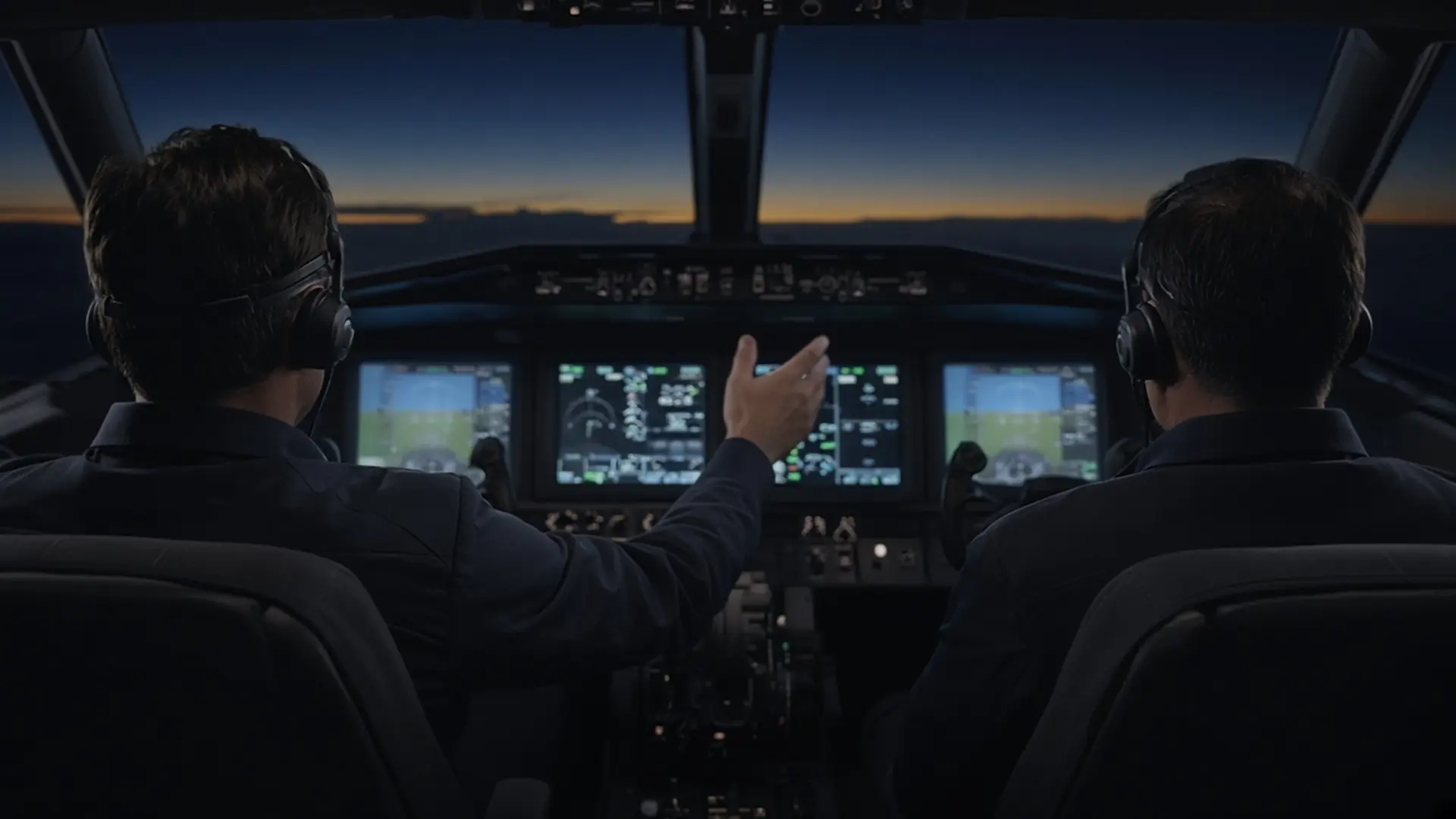
Accident reports often describe the final moments of a flight with precision: an airspeed, an altitude, a control input. The harder question is how the crew arrived at that point. Crew resource management (CRM) and pilot decision-making examine the communication, workload management, and judgment that came before the outcome. These issues appear in a large share of aviation matters, and they are among the most frequently misunderstood. An aviation expert witness working in this area has to explain what good crew performance looks like in practice, and then show where the record departs from it.
I am an ATP-rated Chief Pilot with more than 5,000 flight hours, currently leading a Part 91 corporate flight department in Tampa, Florida. Crew coordination, briefings, and go or no-go decisions are part of my working week, not an academic subject. That perspective shapes how I read a cockpit voice recorder transcript, a flight data record, or a crew's training history.
What CRM Actually Covers
The FAA's Advisory Circular (AC) 120-51, Crew Resource Management Training, describes CRM as the effective use of all available resources, including people, equipment, and information, to achieve safe and efficient flight operations. It organizes crew performance around communication processes and decision behavior, team building and maintenance, and workload management and situation awareness. CRM training is required for Part 121 operators under 14 CFR 121.404 and for Part 135 operators under 14 CFR 135.330. Part 91 corporate flight departments are not subject to the same regulatory requirement, but many adopt CRM training through their own programs, their training providers, or voluntary safety standards.
Closely related is AC 120-71, Standard Operating Procedures and Pilot Monitoring Duties for Flight Deck Crewmembers, which addresses the role of the pilot monitoring. In a two-pilot aircraft, the pilot monitoring is expected to track the flight path, call out deviations, and intervene when necessary. When that function breaks down, the question is rarely about one person. It is about whether the crew's procedures, briefings, and training supported effective monitoring in the first place.
How Decision-Making Is Analyzed
Individual decisions are rarely unsafe in isolation. Continuing into deteriorating weather, accepting a tighter turn time, or deferring a fuel stop can each be reasonable on its own. The analysis focuses on their cumulative effect and on whether the crew recognized how the margins were changing. A useful review reconstructs the flight as a sequence of decision points, identifies what information was available at each one, and asks what an appropriately trained crew in that operation would have been expected to recognize and do.
That reconstruction draws on several sources. Recorded flight data and avionics information show what the aircraft did. Cockpit voice recorder transcripts, where available, show what the crew said and when. Weather products, air traffic control (ATC) communications, and dispatch or trip records show what the crew knew. Training records and the operator's standard operating procedures (SOPs) show what the crew was taught to do. Human factors such as fatigue, workload, expectation bias, and authority gradient between captain and first officer are examined through that evidence rather than assumed.
The review then moves from the cockpit to the organization. Scheduling practices, trip pressure, how the operator handled prior safety reports, and whether its CRM training reflected the realities of its operation can all affect how crews make decisions. As a pattern, recurring departures from procedure point to the safeguards around the crew as much as to the crew itself.
Method and Limits
Documented facts are kept separate from inference. Where there is no cockpit voice recorder, conclusions about crew communication are limited to what other evidence supports, and those limits are stated plainly. The NTSB's findings provide the investigative foundation, and independent analysis explains their operational significance. Whether particular conduct supports a legal claim is a matter for counsel.
Frequently Asked Questions
Does CRM apply to single-pilot operations?
Yes. The FAA's guidance on single-pilot resource management applies the same principles of workload management, use of available resources, and risk assessment to single-pilot flights, including the use of ATC, automation, and dispatch support.
Is CRM training required for Part 91 corporate flight departments?
Not by regulation in the way it is for Part 121 and Part 135 operators. Many flight departments train to it anyway, and their own manuals and training programs help define the expected practice.
How is pilot decision-making evaluated without a cockpit voice recorder?
Through flight data, ATC recordings, weather information, witness accounts marked as reported, and the operator's records. The analysis states which conclusions the available evidence supports and which it does not.
Do you work with both plaintiff and defense counsel?
Yes. The analysis is independent and follows the operational record.
Discuss a CRM or Decision-Making Matter
When a matter turns on crew coordination, pilot judgment, or human factors, an early independent review can identify which records will show how decisions were made. Learn more about AeroVerdict's aviation expert witness services.