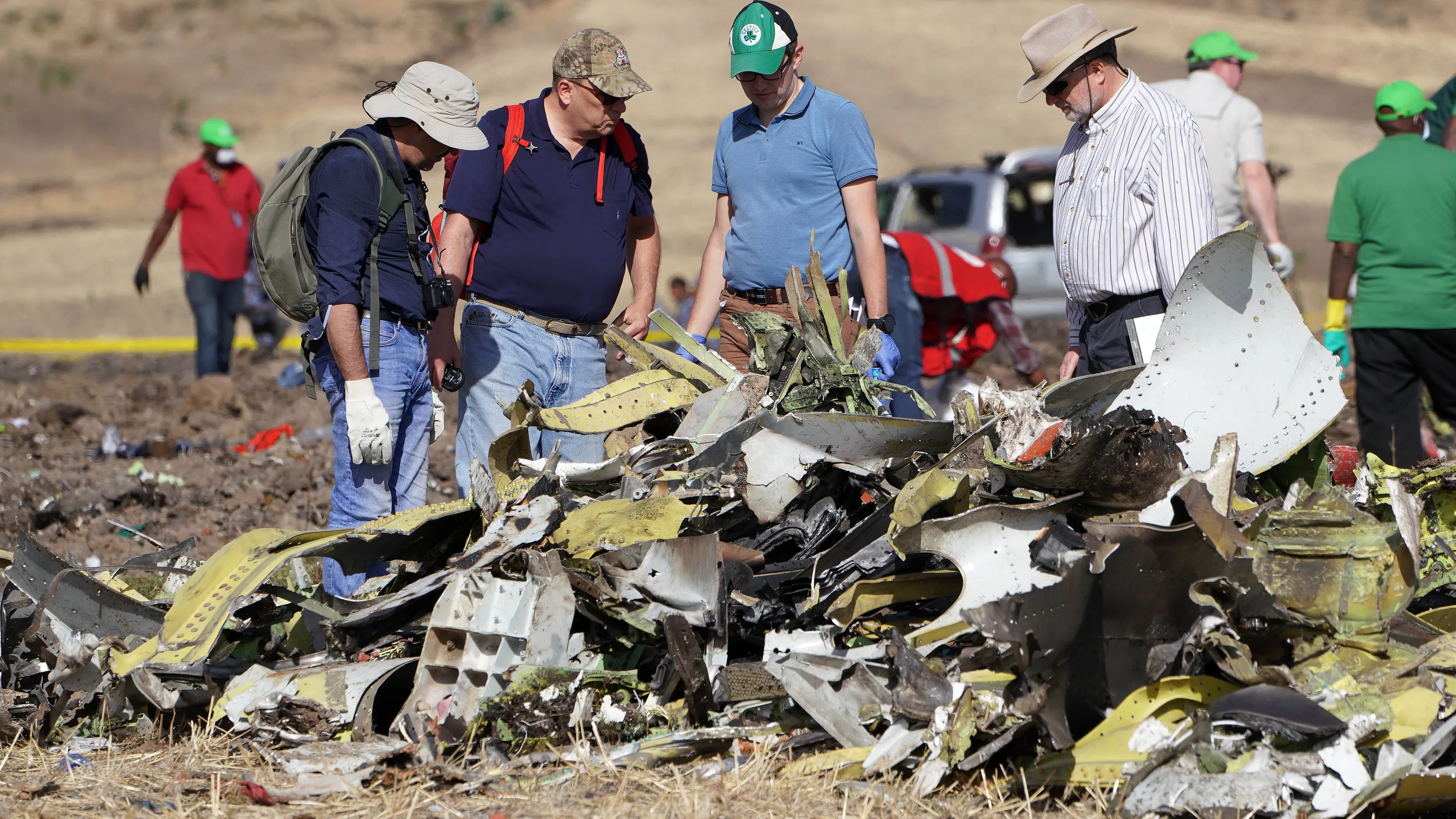
When people hear about an aviation accident, they often look for one clear cause. Was it pilot error? Weather? Maintenance? A runway issue? A mechanical failure?
In real aviation accident analysis, the answer is usually more complex.
Most accidents develop over time. Small decisions, human factors, environmental conditions, aircraft status, operational pressure, and procedural weaknesses begin to interact. Eventually, the available safety margin disappears.
For attorneys, investigators, aviation professionals, and serious readers, understanding that chain is essential to evaluating accident causation, pilot decision-making, FAA compliance, and operational risk.
Aviation Accidents Are Usually the End of a Chain
In many cases, the final event is only the last visible link in a longer operational sequence.
An aircraft may overrun a runway, descend below minimums, lose control during a critical phase of flight, or continue an unstable approach. To an outside observer, that final event can appear to be the entire accident.
To an investigator or experienced aviation operator, it is usually the starting point.
A proper accident analysis asks broader questions:
- What conditions existed before the final event?
- What operational pressures were present?
- How did pilot workload change during the flight?
- Were margins reduced gradually?
- Were there missed opportunities to break the chain?
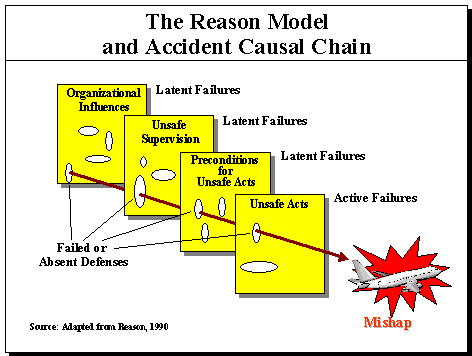
These questions matter because aviation accidents rarely begin at the point of impact. They often begin much earlier, during planning, briefing, weather evaluation, risk assessment, or the first point where the flight no longer develops as expected.
Why the Final Mistake Is Often Not the Full Explanation
Public discussion often focuses on the last error. That may be a missed go-around, a failure to maintain control, a poor landing decision, or an incorrect response to changing conditions.
But the final mistake does not always explain why the crew reached that point.
Aviation safety analysis requires more than identifying the final action. It requires understanding the operational environment that shaped that action. That includes workload, cockpit communication, training, standard operating procedures, weather interpretation, aircraft performance, and the expectations surrounding the flight.
This is especially important in cases involving pilot decision-making in aviation accidents, where the legal question is often not simply what the pilot did, but why that decision appeared reasonable or acceptable at the time.
The Role of Operational Pressure in Aviation Accidents
Operational pressure is one of the most important factors to evaluate in accident causation.
Pressure in aviation is not always direct. It may not appear as an explicit instruction to continue. More often, it is subtle. A crew may feel pressure to complete the trip, remain on schedule, avoid passenger inconvenience, preserve a weather window, or continue with a plan that appears only slightly outside preferred limits.
In business aviation and corporate flight operations, those pressures can be especially relevant. Mission completion, owner expectations, passenger schedules, repositioning needs, and complex trip logistics can all influence judgment.
Pressure alone does not cause accidents. But it can reduce the margin for conservative decision-making.
That is why operational context matters in corporate aviation safety and flight department risk management. A decision that looks simple after the accident may have been shaped by several pressures building well before the final event.
Human Factors Are Central to Accident Causation
Human factors play a central role in how aviation accidents actually happen.
Experienced crews can still experience task saturation, confirmation bias, fixation, fatigue, and degraded situational awareness. These are not simply signs of incompetence. They are predictable realities of human performance under operational load.
That is why aviation relies on systems designed to protect against known human limitations, including:
- Standard operating procedures
- Checklist discipline
- Crew resource management
- Stabilized approach criteria
- Go-around policies
- Recurrent training
- Operational oversight

When those protections are weak, bypassed, unclear, or ineffective in the moment, accident chains become harder to interrupt.
This is why human factors analysis in aviation accidents is so important. It helps explain how competent people can make decisions that appear flawed after the fact, but seemed manageable inside the actual operating environment.
Why "Pilot Error" Is Often Too Simplistic
The phrase "pilot error" is often used as a summary, but it is rarely a complete analysis.
If a pilot made an incorrect decision, the next step is to understand why that decision occurred. What cues were available? What tasks were competing for attention? What was happening in the cockpit? What weather, aircraft, runway, or operational factors influenced judgment?
A meaningful investigation should also ask whether procedures were clear, whether training addressed the scenario, whether the crew had enough margin, and whether earlier intervention points were missed.
Aviation accident investigation should not stop at labeling the outcome. It should identify the pathway that led there.
That approach produces more useful safety lessons and more accurate litigation support analysis for attorneys evaluating causation, foreseeability, and standard of care.
Accident Investigation Requires Looking Upstream
The best aviation investigations look upstream from the final event.
They examine:
- Flight planning
- Dispatch or preflight context
- Weather conditions and interpretation
- Aircraft status
- Airport and runway environment
- Crew coordination
- Decision points during the flight
- Operational culture
- Procedural compliance
- Missed intervention opportunities
This is how investigators identify not only what happened, but how the operation moved toward failure.
That distinction matters in litigation, safety management, operational review, and prevention. It is also central to understanding the common causes of private aircraft accidents, where multiple operational factors often align before the final outcome.
The Operational Chain Is Where Prevention Lives
If accidents are chains, then prevention also exists within the chain.
A crew can break the sequence with an earlier diversion, a go-around, a more conservative preflight decision, a stronger briefing, or better adherence to stabilized approach criteria.
An operator can break the chain with better training, clearer procedures, stronger safety culture, and more disciplined risk management practices.
This is one of the most important realities in aviation safety: accidents often become possible long before they become visible.
That principle is especially relevant in cases involving unstable approaches, runway excursions, and weather decision-making, where the final event is often preceded by multiple opportunities to reassess the plan.
Key Takeaways for Aviation Accident Analysis
How aviation accidents actually happen is not usually answered by one dramatic moment.
In most cases, accidents result from a progression of factors that align at the wrong time. The final event matters, but it is only part of the picture. Real analysis requires understanding the operational chain behind the outcome.
For aviation attorneys, investigators, journalists, and flight operations professionals, that deeper perspective is essential. It supports stronger findings, clearer safety lessons, and a more accurate understanding of how aviation events truly develop.
Need Aviation Expert Analysis?
If you are evaluating an aviation matter involving accident causation, pilot decision-making, FAA compliance, or operational risk, AeroVerdict provides expert aviation analysis for attorneys and legal teams.
Request an Expert Case ReviewConclusion
Aviation accidents are rarely the product of one isolated failure. They are usually the result of decisions, conditions, pressures, and system weaknesses that combine over time.
Understanding that chain is where meaningful accident analysis begins.
At AeroVerdict, aviation events are analyzed through the lens of operations, pilot decision-making, human factors, and accident causation — because that is where the most useful legal and safety insight is found.
For more operational aviation analysis, visit the AeroVerdict articles library.
About the Author
Kevin Alvarez
Kevin Alvarez is an ATP-rated Chief Pilot and aviation expert witness with more than a decade of leadership experience in corporate aviation operations. He provides expert analysis related to aircraft accident investigation, pilot decision-making, FAA compliance, and operational risk through AeroVerdict.
Full Bio